
Written by: Elisa Fernández-Arias
 |
College entrance exams, long used to demonstrate an individual's aptitude for learning, are being deemed optional at many colleges and universities across the U.S.. However, some schools that previously announced college entrance exams were optional are now requiring them again. Study.com analyzed recent trends in universities adopting test-optional admission policies to understand why some schools are going this route and other schools continue to rely on these exams.
More than 1,700 U.S. colleges are test-optional for fall 2023, according to FairTest data, with nearly 80 schools not considering college entry exams at all. While test-optional means that students are not required to take an entrance exam, they can still submit scores. High scores can still help students gain admittance, making test-optional policies difficult for students and families to navigate. Test scores are also used regularly to award scholarships and merit-based aid.
Get expert advice on which entrance exams to take and world-class ACT and SAT test tutoring from Enhanced Prep.
The Common App, which manages applications for more than 1,000 colleges worldwide, reported that 89% of its member institutions didn't require test scores in the 2020-2021 admissions cycle, compared to about a third the previous year. This was the first admissions season of the pandemic, when many testing sites were closed and testing was largely disrupted.
The pandemic accelerated the process of colleges and universities reassessing whether to consider standardized test scores. The schools that changed their entrance exam requirements saw record application numbers and greater diversity in 2021-2022 admissions. Meanwhile, ACT® test scores among 2022 high school graduates reached a 30-year low.
Keep reading to learn more about why many colleges are making entrance exams optional and their impact on applicant diversity.
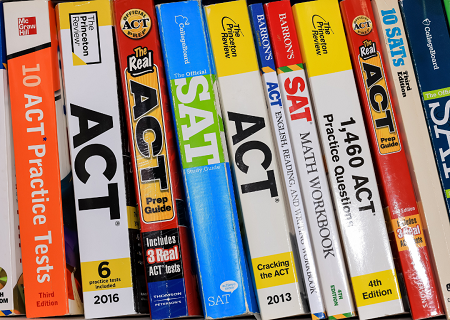 |
COVID-19 prevented students from taking the ACT® tests and SATs
By September 2021, the SAT had canceled 1.5 million registrations due to COVID-19-related restrictions and closures. ACT, Inc. announced on Aug. 5, 2020, that all its December 2020 and February 2021 tests were canceled internationally, citing COVID-19 precautions.
SAT providers allowed students whose test centers had closed to get a refund and register for a future test date. They also took other precautions, such as requiring masks, implementing social distancing, and asking students to sign health and safety waivers before entering testing centers or rooms. ACT, Inc. added three new dates for tests in the fall of 2020, totaling eight test dates for that season. ACT, Inc. expanded its communications and customer care, added more test sites in high-demand areas, and monitored its testing centers to determine whether test cancellations were needed.
Many tests were still canceled. Limited in-person operations restricted what was possible with college tests. As a result, more than 600 colleges and educational institutions, including Ivy League universities, historically Black institutions (HBCUs), and liberal arts colleges, switched to making tests optional for the 2020-2021 application season, with dozens refusing to consider test scores at all.
 |
Colleges have moved to test-optional over the past few decades
More than 1,000 colleges made the SATs and ACT® tests optional before the pandemic. The health emergency sped up the process of universities and colleges reassessing whether standardized tests would be factored in when considering applicants.
It's important to note, though, that many top schools still require students to submit ACT or SAT scores. Some of these include MIT, Georgetown University and University of Florida. The United Sates Naval Academy and the United States Military Academy at West Point also require entrance exams.
Many schools adopted test-optional or test-blind policies in the decades leading up to COVID-19. Universities and colleges have increasingly limited ACT® tests and SATs in their admissions processes since 1968; in the late '90s, the number of colleges making tests optional surged, with 280 colleges choosing to do so during that period. Only 80 schools are test-blind, meaning they will not look at or consider any test scores, and almost half of these schools are located in California.
University of California President Richard Atkinson, in 2001, said colleges should not use the SAT anymore and switch to tests more closely linked to high school curriculums. California conducted studies from 2001 to 2005, finding that high school grades - not testing - indicated college performance best.
The College Board and ACT, Inc. changed their tests to reflect this, but many colleges believed the tests still had their "historic problems," such as perceived biases. In 2004, Bates College found that the graduation rates of students who submitted test scores and those who didn't were incredibly close, and those who hadn't taken tests had slightly higher graduation rates. In 2008, the National Association for College Admission Counseling published a report that challenged universities to reconsider admission test requirements.
Schools that have chosen to be test-optional say they want a diverse student body. Students who are less likely to submit test scores - women, those from historically marginalized communities, Pell Grant recipients, first-generation applicants, and those with learning disabilities - may be more likely to apply if tests are optional.
 |
Feel like you might be falling behind? Get online tutoring from Study.com and catch up with personalized help.
College entry exams may have equity issues
Among students who graduated in 2021 and met three or four college readiness benchmarks for the ACT® test, Black, Native American/Alaska Native, Hispanic, and Native Hawaiian/other Pacific Islander test-takers scored lower than white and Asian students. Among those who took the SAT, 42% of test-takers were white, 23% were Hispanic/Latino, 11% were Black, 11% were Asian, 4% were of two races or more, and 1% were Native American/Alaska Native.
Low-income students may also be at a disadvantage. One reason wealthier students get higher SAT scores than low-income students is the cost of the tests themselves, considering that the more times a student takes the SAT, the more likely they are to get a better score. While low-income students can receive waivers covering two SATs and six SAT subject tests, wealthy students have nevertheless been more likely to take standardized tests more than once.
Affluent students also have more access to academic support, such as tutors and test prep classes, and are more likely to get additional time when taking standardized tests than their lower-income peers.
There are a variety of options available to students of all backgrounds who are looking to improve their score on college entrance exams. These include self-directed books and online courses, online or in-person group classes, and 1-1 or small-group tutoring.
Even at schools that don't require the exam for admission, test scores can unlock scholarship and financial aid opportunities. Many colleges offer automatic scholarships, including full tuition scholarships, to students who achieve certain ACT or SAT test scores. Merit-based aid often is givenbased on students test scores.
 |
Some colleges moving to test-optional received more applications
There was an 18% increase in the number of applications to private schools on the Common App from 2019-2020 to 2021-2022. That growth was 26% for public schools.
The Massachusetts Institute of Technology had 33,240 applicants for the 2021-2022 school year, a whopping 66% higher than the year before; the school accepted 1,340, causing its admission rate to decrease from 7% to 4% in one year.
UCLA also experienced a surge in applications, receiving nearly 139,500, a 28% increase year over year. After three of its colleges adopted test-blind admissions policies - meaning the colleges didn't consider test scores - in 2020, Cornell University received around 71,000 applications, far higher than the 50,000 it usually receives per year.
When Michigan State University went test-optional for the fall of 2021, it received approximately 51,000 applications, an 11% year-over-year increase. The University of Virginia also experienced a surge in applications for fall 2021, with over 48,000, up 15% compared to the prior year.
The rise in applications may not be beneficial to students or colleges. Preliminary research from researcher Kelly Slay at Vanderbilt University found that admissions officers are overwhelmed by the large increase in applications and have trouble differentiating them, according to reporting by the Hechinger Report. Increased applications does not mean a direct impact on a change in the landscape of acceptance. Each of these applications and accompanying essays come at the cost of a time and money investment on behalf of the student and/or family.
 |
From PEMDAS to permutations, fractions to derivatives, Study.com can help you solve any math problem.
Going test-optional could yield more diverse applicants, admissions
One 2021 study published in the American Educational Research Journal reported that going test-optional at some private universities correlated with a 10% to 12% increase in Black, Latino, and Native American student enrollment.
At Middlebury College, its 2021-2022 incoming class was the most diverse it had seen when it accepted those students. Nicole Curvin, dean of admissions, said this was partly because of its test-optional policy and the institution's outreach to low-income students. Of the fall entrants for the 2021-2022 academic year, 37% were people of color, up 8 percentage points from the prior year.
Cornell saw a 50% increase in how many first-generation students were enrolled and had an overall higher diversity in enrollment. The University of Chicago also increased the share of Black, Latino, rural, and first-generation students compared to when the university changed to a test-optional admissions policy.
However, other research has found that test-optional policies do not achieve the aim of increasing racial or socio-economic diversity. Students wondering if they should take the ACT or SAT exam should consider how the exam might benefit them even at schools that are test optional. While test-blind schools (which make up only 2% of colleges and universities in the US) won't even look at students' SAT or ACT scores, test optional schools do consider scores when they are submitted. A strong ACT or SAT score could be a differentiator in a sea of similar applications and transcripts.
ACT® is a registered trademark belonging to ACT, Inc. ACT, Inc. is not involved with or affiliated with Study.com, nor does ACT, Inc. endorse or sponsor any of the products or services offered by Study.com.