

Your next lesson will play in
10 seconds

Dr. Gillaspy has taught health science at University of Phoenix and Ashford University and has a degree from Palmer College of Chiropractic.
This video explains the essential processes of our respiratory system.
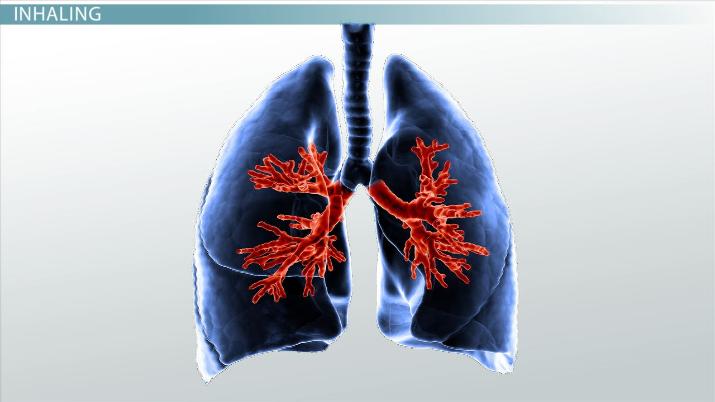
Our lungs are vital organs in the chest that exchange oxygen and carbon dioxide.
When we inhale, the diaphragm contracts and flattens, creating space in the chest to draw in air.
The inhaled air travels through bronchioles (branched tubes) to reach alveoli (tiny air sacs).
Oxygen passes through the thin alveoli walls into capillaries, where blood cells transport it throughout the body.
During exhalation:
This continuous breathing cycle ensures our cells receive necessary oxygen and remove waste carbon dioxide.
Read How Our Lungs Work: Main Processes & Function Lesson