Copyright
 Literature / Dramatic Literature / Dramatic Elements /  Comedy Genres

Tragicomedy | Definition, Characteristics & Examples

What is tragicomedy? Tragicomedy is a genre of plays that incorporates elements of both tragic and comic drama. Tragicomedy was first mentioned by the Roman dramatist Plautus in reference to his play Amphitryon, which is widely considered to be the first tragicomedy. Plautus established the nascent tragicomedy definition: for Plautus, tragicomedies were plays in which individuals swap roles that are very distant in hierarchies. Gods and men will trade places, as will masters and slaves. The tragic and comedic elements came from the performances of each role; the gods and masters would adopt comedic characteristics and plot beats, while the men and slaves would adopt a tragic nobility. Plautus' specific definition of tragicomedy would later broaden during the Renaissance, being applicable to all plays that fuse elements of tragedies and comedies.

An error occurred trying to load this video.

Try refreshing the page, or contact customer support.

Your next lesson will play in 10 seconds
  • 0:01 Definition of Tragicomedy
  • 0:56 Comedy Characteristics
  • 1:24 Tragedy Characteristics
  • 3:05 Tragic and Comedic Examples
  • 3:51 Examples of Tragicomedies
  • 6:35 Lesson Summary

To understand the characteristics of a tragicomedy, one must first look at the characteristics of comedies and tragedies. Both tragedies and comedies borrowed tropes established by Greek dramatists. Comedy characteristics common in tragicomedies are as follows:

While Shakespeare's contribution to the tragicomedy genre is notable enough to have his own section below, later tragicomedies tended to focus less on specific character or plot traits and more on generating a sense of dark humor. Two tragicomedy examples achieved this masterfully: Edmond Rostand's Cyrano de Bergerac and Tom Stoppard's Rosencrantz and Guildenstern Are Dead.

  • Cyrano de Bergerac is a play that was written in 1897, following the embellished life of a real individual by the same name. The play's Cyrano is an accomplished soldier, duelist, and poet deeply in love with his distant cousin Roxane. However, at the same time, Cyrano is extremely self-conscious about his nose, believing that it makes him ugly and that Roxane would never be interested in him. Roxane confides in Cyrano that she loves another man, Christian, and asks him to look after that individual throughout the various dangerous situations they get into (since both men are soldiers in the midst of a brewing war). While Christian is quite a dense character, Cyrano helps him by feeding eloquent lines or writing poetry that Christian might use to woo Roxane. Christian begins to feel guilty for misleading Roxane, but he dies before the truth is out. Fifteen years later Cyrano dies, too, still denying that Christian's words were his. As a basic synopsis of the play displays, tragic and comedic elements are mixed throughout. Nevertheless, in terms of other tragicomedies, Cyrano de Bergerac leans more towards the tragic end of the scale.

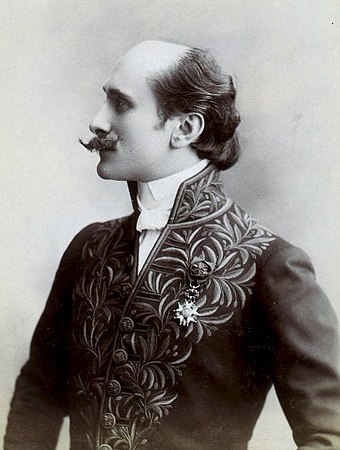
Edmond Rostand, French poet and playwright

While Edmond Rostand had an impressive roster of plays across genres, he achieved international renown through his tragicomedies.

  • Rosencrantz and Guildenstern Are Dead was written in 1966, following the side characters in Shakespeare's Hamlet by the same name. The play roughly follows the trajectory of those characters throughout the plot of Hamlet. In Shakespeare's original play, Rosencrantz and Guildenstern are old friends of Hamlet who were brought in by the king to investigate Hamlet's schemes. Their attempts fail, and Hamlet ultimately deceives them and causes their execution in England. The theme of absurdity rules Stoppard's play as events happen for seemingly little or no reason. Much of the humor comes from the witty repartee and wordplay, but the tragic element is clear; Rosencrantz and Guildenstern slowly realize that they are working against their old friend and, eventually, realize that they are swiftly moving towards their deaths. Much of the play has a tinge of cruel irony to it, but there are some nods to classic tragicomedy. For example, Rosencrantz and Guildenstern are often mistaken for one another by other characters, including the king and queen that summon them at the beginning of the play.

Tragicomedy is a genre of plays that borrows characteristics from both tragedies and comedies. On the comedic side, wordplay, marriages, births, and mistaken identities are included. Characteristics borrowed from tragedies include death, irreversible consequences, and hamartia (a large error on the part of a character that leads to their misfortune and, in proper tragedies, their ruinous end). Authors oftentimes utilize the tragicomic genre due to its potential to reflect events in a realistic way.

Video Transcript

Definition of Tragicomedy

Probably most of us recognize the emotions in the masks of tragedy and comedy, but if there were a third for tragicomedy, it would undoubtedly have quite the bewildering expression. We can tell just from the name that a tragicomedy is a dramatic work containing both tragic and comedic elements, but how do these elements combine to create something altogether different from tragedy or comedy?

The term first appeared around the 3rd century B.C.E. when the Roman comedian Plautus used the Latin tragicomoedia to refer to his play Amphitruo. To get a better understanding of how tragicomedy works, let's first take a look at some characteristics of comedy and tragedy, then we'll see how they mesh in Plautus' work.

Comedy Characteristics

  • Historically, comedic drama tends to end either with a marriage or a birth. Either way, there are typically some romantic or erotic aspects present.
  • Much of the comedy from ancient Greece to Shakespeare is what is known as comedy of errors, which generally uses devices such as mistaken identity and slapstick for comedic effect.
  • Comedies are usually rich in puns and other forms of wordplay.

Tragedy Characteristics

  • There is typically at least one death (real or metaphorical), and there are frequently tragedies in which one or more of the characters are dead by the end.
  • Errors are a big part of tragedy as well, but they and their consequences are much more severe. Most tragic errors are a result of some human vice, such as pride, anger, or irreverence of divine authority (hubris).
  • Many tragic consequences are not only irreversible but also applicable to future generations (i.e., via curses, failed treaties, or military campaigns, etc.).

With these characteristics in mind, let's see if we can't figure out what makes Amphitruo a tragicomedy. In the play, Jupiter, king of the gods, falls in love with the mortal Alcmene, who is married to the farmer, Amphitryon. In order to share her bed, Jupiter disguises himself as Amphitryon and comes to Alcmene while her husband's back is turned. The farmer eventually finds out that his wife has been unfaithful when she ends up pregnant, and he threatens to publically disgrace her. Jupiter quickly intervenes and tells Amphitryon the truth, saving Alcmene from certain doom. In the end, they all celebrate the birth of Jupiter's son by Alcmene, Hercules. Plautus also uses a wide variety of puns and wordplay in this play. Any number or type of characteristics from either genre may be combined to form a tragicomedy, but let's take a closer look at the synopsis to see which ones Plautus chose.

Tragic Example

Committing marital infidelity would have meant social death for Alcmene, and, as a woman, she would have most likely met her own physical demise as well, because she wouldn't have been able to provide for herself.

Comedic Example

This is certainly a case of mistaken identity, since Alcmene is convinced that Jupiter is her husband. The error in this case would have been the unforgivable breach of the marriage oath; however, because Jupiter intervenes, the error and its consequences are reversed. This makes what could be potentially fatal, a harmless mistake. Also, the story ends in characteristically comedic fashion with the birth of Hercules, and the use of puns adds to the comedic quality.

Examples of Tragicomedies

Now that we've gone through the steps of defining one tragicomedy, here are a few others:

Register to view this lesson

Are you a student or a teacher?

Unlock Your Education

See for yourself why 30 million people use Study.com

Become a Study.com member and start learning now.

Become a Member  Back

Resources created by teachers for teachers

Over 30,000 video lessons & teaching resources‐all in one place.
Video lessons
Quizzes & Worksheets
Classroom Integration
Lesson Plans

I would definitely recommend Study.com to my colleagues. It’s like a teacher waved a magic wand and did the work for me. I feel like it’s a lifeline.

Jennifer B.
Teacher
Jennifer B.
FAQ
What are the characteristics of tragicomedy?

Tragicomedies take characteristics from both tragedies and comedies. For instance, elements of tragedy that may manifest in a tragicomedy are deaths of the characters, irreversible decisions, and hamartia (defined as a pivotal moment in which a character's flaw causes a terrible error in judgment). On the other hand, elements of comedy can consist of a conclusory birth or marriage, clever wordplay, or cases of mistaken identity.

What is a Shakespearean tragicomedy?

Shakespeare never explicitly regarded his own plays as tragicomedies. However, modern scholars consider many of his "problem plays"--plays that historically fit neither in the genre of comedy nor the genre of tragedy--to be tragicomedies. Shakespeare's tragicomedies portray events in a natural and realistic manner.

Is "Romeo and Juliet" a tragicomedy?

While "Romeo and Juliet" diverges from the typical formula of tragedies, it lacks the comedic scenes and tropes to classify as a true tragicomedy. "Romeo and Juliet" fits awkwardly into the tragic genre due to its lack of a noble tragic hero. In the place of an admirable figure brought low by a flaw, "Romeo and Juliet" follows two young, impressionable people given and acting on terrible advice from their peers.

What is an example of a tragicomedy?

French playwright Edmond Rostand's "Cyrano de Bergerac" is a perfect example of a tragicomedy. While most of the scenes in the play are inherently comedic, they are caused by the main character's tragic self-consciousness that prevents him from ever finding happiness. In retrospect, this causes many of the comedic moments to have a dark, pessimistic humor.

Create an account to start this course today
Used by over 30 million students worldwide
Create an account
All Comedy Genres Topics