You must cCreate an account to continue watching
Register to access this and thousands of other videos
Try Study.com, risk-free
As a member, you'll also get unlimited access to over 88,000 lessons in math, English, science, history, and more. Plus, get practice tests, quizzes, and personalized coaching to help you succeed.
Get unlimited access to over 88,000 lessons.
Try it risk-freeAlready registered? Log in here for access
BackAlready registered? Log in here for access
 Jump to a specific example
How to Find an Output of a Function from its Graph
Step 1: Identify the {eq}x{/eq}-value of the point we are looking for. The number inside the parentheses, or the input of the function, is the {eq}x{/eq}-value of the point we need to find.
Step 2: Find the point on the graph where {eq}x{/eq} is equal to the value identified in the previous step. Determine the coordinates of this point.
Step 3: The {eq}y{/eq}-value of the point identified in the previous step is the output asked for in the problem.
How to Find an Output of a Function from its Graph Vocabulary
Input of a graph: The input values for a graph of a function are the {eq}x{/eq}-values of points on the graph. In function notation, f(x), the input is the value inside the parentheses.
Output of a graph: The output values for a graph of a function are the {eq}y{/eq}-values of the points on the graph. In function notation, the output is represented as f(x), where x is the input.
So, let's try using these steps and definitions to find an output of a function from its graph, in the following two examples.
How to Find an Output of a Function from its Graph: Example 1
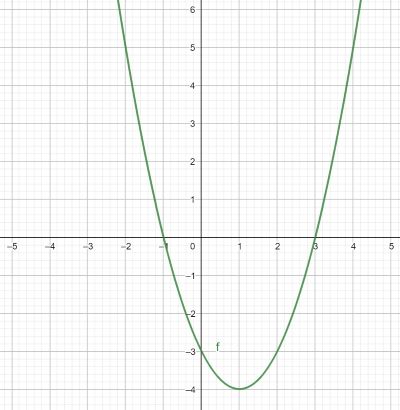
Using the graph of the function {eq}f(x){/eq} shown below, find {eq}f(4){/eq}.
 |
Step 1: Identify the {eq}x{/eq}-value of the point we are looking for. The number inside the parentheses, or the input of the function, is the {eq}x{/eq}-value of the point we need to find.
We are asked to find {eq}f(4){/eq}. The number inside the parentheses, or the input of the function, is 4, which means we are looking for a point on the graph with an {eq}x{/eq}-value that is equal to 4.
Step 2: Find the point on the graph where {eq}x{/eq} is equal to the value identified in the previous step. Determine the coordinates of this point.
We need to follow the graph until we get to {eq}x=4. {/eq}
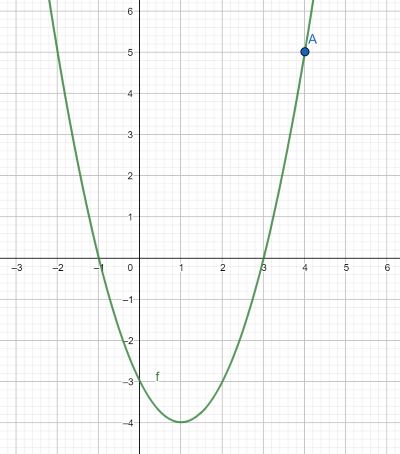 |
The coordinates of this point are {eq}(4,5) {/eq}.
Step 3: The {eq}y{/eq}-value of the point identified in the previous step is the output asked for in the problem.
The {eq}y{/eq}-coordinate of the point from the previous step is 5. Therefore:
$$\boxed{f(4)=5} $$
How to Find an Output of a Function from its Graph: Example 2
Using the graph of the function {eq}f(x){/eq} shown below, find {eq}f(-2){/eq}.
 |
Step 1: Identify the {eq}x{/eq}-value of the point we are looking for.
We are looking for a point on the graph with an {eq}x{/eq}-value that is -2.
Step 2: Determine the coordinates of the point we need.
The coordinates of this point are {eq}(-2,8) {/eq}.
Step 3: The {eq}y{/eq}-value of the point identified in the previous step is the output asked for in the problem.
The {eq}y{/eq}-value of the point (-2,8) is 8, so:
$$\boxed{f(-2)=8} $$