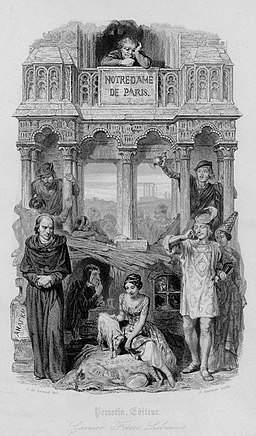
In The Hunchback of Notre Dame, Quasimodo is a character who is misunderstood by many. He has a hunchback and a wart covering one eye. He is abandoned when he is born, and throughout his life, he is often feared or avoided because of the way he looks. He is adopted by Claude Frollo, Archdeacon of Notre Dame. Quasimodo becomes the bell-ringer at the cathedral, a job he loves, though he eventually goes deaf from the loud sound of the bells. Though people are afraid of him because they find his physical appearance frightening, Quasimodo's behavior throughout the novel shows the kindness that exists within him.
Quasimodo has a variety of character traits, including:
- Loyalty—He feels loyalty in the novel to Frollo, for instance, who took him in as a baby.
- Strength of character—He goes through life facing extreme and unfair disapproval from others, yet he retains an inner core of goodness and kindness.
- Disenchantment with the world—Before Esmeralda shows kindness to him by offering him water, Quasimodo has not experienced much positive attention from the world around him and has gotten used to this being the case.
- Selflessness in action—Even at risk to himself, he helps other people. He is willing to put himself at risk, for instance, to help Esmeralda when she is in trouble.
- Compassion toward others—He takes Esmeralda to the safety of Notre Dame Cathedral so that she can have sanctuary and takes care of her there.
- Musicality—He loves the bells of Notre Dame Cathedral, and he communicates with the world through the bells' ringing.
Frollo and Quasimodo
In The Hunchback of Notre Dame, the Archdeacon of the Notre Dame Cathedral is Claude Frollo. The novel shows Frollo's character change over time. At the start of the novel, Frollo is a kind and scholarly priest who looks after his younger brother Jehan and also adopts Quasimodo after Quasimodo is abandoned. Quasimodo has grown up feeling loyalty toward Frollo, who ends up exploiting this loyalty. Frollo, who changes through the course of his life from kind and scholarly to obsessive and bitter, becomes besotted with Esmeralda and has Quasimodo attempt to kidnap her.
Esmeralda and Quasimodo
After Quasimodo tries to kidnap Esmeralda at the behest of Frollo, Quasimodo is punished by being displayed in public and beaten. Esmeralda comes to help Quasimodo during this punishment, providing him with much-needed water to drink. Quasimodo falls in love with Esmeralda for her kindness.
Later, Esmeralda is arrested for the murder of the soldier Phoebus (which she did not commit) and sentenced for murder via supposed witchcraft. In fact, Phoebus is alive after an attempted murder by Frollo, who witnessed Phoebus attempting to seduce Esmeralda. Frollo offers to save Esmeralda from execution if she agrees to return his feelings of love and be his, but Esmeralda rebuffs this offer. As Esmeralda is about to be executed, Quasimodo whisks her off into the Notre Dame Cathedral, where she can be safe under a law that allows convicted prisoners to take sanctuary there.
Frollo assaults Esmeralda while she is hiding in the cathedral. Quasimodo intervenes and rescues her, and Frollo realizes that Quasimodo is in love with Esmeralda. Frollo organizes a distraction and takes Esmeralda away from Notre Dame. He again requests that Esmeralda return his love in return for her life being saved, and Esmeralda again refuses. Esmeralda is eventually executed, and Frollo watches the execution from Notre Dame's bell tower. Quasimodo avenges the death of Esmeralda by pushing Frollo to his death. Quasimodo dies, full of grief, after climbing into the mass grave where Esmeralda is buried.