History Courses / Course

The My Lai Massacre: Summary & Facts

Instructor Christina Boggs

Chrissy has taught secondary English and history and writes online curriculum. She has an M.S.Ed. in Social Studies Education.

The Vietnam War is a very controversial subject for many Americans. This lesson discusses the events of the My Lai Massacre, arguably one of the worst atrocities committed during the Vietnam War.

Beginning in 1954, Vietnam was a divided nation. After decades of French control, the country had secured its independence. As a new country, its leaders were torn over how to run it. People in the north favored communism, while people in the south were heavily influenced by the democratic West. Ultimately, the country was cut in half creating two states: North Vietnam and South Vietnam. Tensions between the two sides escalated over the years, leading to increased U.S. involvement during the 1960s. While only about 800 American soldiers had boots on the ground during the 1950s, by 1962 this number jumped to around 9,000.

The primary focus of U.S. troops was to push back the communist Viet Cong (also called the National Liberation Front). The Vietnam War was brutal for Americans. The Viet Cong used guerrilla tactics, and the swampy jungle only made things worse. By 1968, American morale was low, especially after the Tet Offensive, when the Viet Cong launched a large-scale attack that completely took American troops by surprise, during the Vietnamese Lunar New Year celebration.

The Charlie Company, part of the Americal Division, had suffered pretty heavy losses as a result of the Tet Offensive. Nearly 30 men were killed, leaving only about a 100 American troops. Charlie Company's men were exhausted, angry, and intent on revenge.

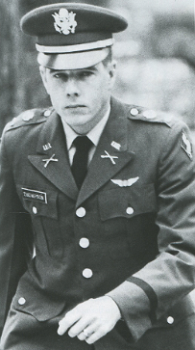
The My Lai Massacre began on March 16, 1968. Surprisingly, Charlie Company did not encounter any Viet Cong. Instead, most of the people living in My Lai were women, children, and old men too old to fight. On Lieutenant Calley's orders, Charlie Company proceeded to devastate the hamlet. They set homes on fire and ruthlessly murdered the villagers. According to witnesses, Lieutenant Calley ordered the Vietnamese people to lie in a ditch before he shot them at point blank range. Countless women were also the victims of sexual assault and rape during the massacre. The actual death toll of the My Lai Massacre is unknown, but historians estimate the numbers anywhere from 175 people up to 500.

American soldier setting fire to a Vietnamese home

Commanding officers of the Americal Division realized pretty quickly that what had happened in My Lai was an atrocity. Their troops had destroyed a village of non-combatants and had not come across enemy fire from the Viet Cong. The My Lai Massacre was kept secret for nearly a year; however, the men who were there that day shared stories with other members of the Americal Division. Soldier Ron Ridenhour sent multiple letters to the president and the secretary of defense about the incident. Ultimately, he shared the story with the press in 1969. Other individuals also spoke out against the My Lai Massacre, including Hugh Thompson, a helicopter pilot responsible for ending the bloodshed. Thompson saw what was happening from the air and landed his helicopter in My Lai. He even threatened to shoot at his own countrymen if they did not stop the carnage.

Helicopter pilot Hugh Thompson

As you can imagine, the American people were truly outraged. The Vietnam War was unpopular to begin with, but news that American soldiers were brutalizing innocent civilians was terrible to hear. On March 29, 1971, the military began investigating the incident. About 30 people were implicated in the My Lai Massacre, but only about half of those people were formally charged. Lieutenant William Calley was the only man convicted. Despite receiving a life sentence for three counts of premeditated murder, his punishment was significantly shortened. Calley was actually released on parole in 1974; he only served three years in prison for his crimes.

The My Lai Massacre led to several important reforms. First, the military revised its training program. It was made clear to soldiers that if a commanding officer commanded them to commit murder or a war crime and they followed through with the order, that would not save them in a court of law. The military also created new ways for soldiers and civilians to report any sort of crime or violation. Both of these measures helped decrease the risk of another massacre. The media also took a greater role in covering the Vietnam War, adding an additional layer of transparency for the military.

Beginning in the 1950s, Vietnam was divided between pro-communist and pro-Western forces. By the 1960s, the U.S. stepped up its role in the region against the communist Viet Cong, also called the National Liberation Front. After the Tet Offensive in 1968, American troops had suffered fairly heavy losses and morale was down. Charlie Company, one of the victims of the Tet Offensive, was given intelligence that the hamlet of My Lai was a Viet Cong stronghold. Angry and exhausted, the men, led by Lieutenant William Calley, entered My Lai on a search-and-destroy mission. When they did not find any Viet Cong, they proceeded to burn the hamlet and execute the women, children, and old men living there. Countless women were raped, and an estimated 175 to 500 people were brutally killed. The My Lai Massacre was kept secret for a year before the story was leaked. Investigations and court proceedings began in 1971. Of the roughly 30 people implicated, William Calley was the only one convicted of a crime. The My Lai Massacre outraged the American people and led to several military reforms and increased media transparency.

Register to view this lesson

Are you a student or a teacher?

Unlock Your Education

See for yourself why 30 million people use Study.com

Become a Study.com member and start learning now.

Become a Member  Back

Resources created by teachers for teachers

Over 30,000 video lessons & teaching resources‐all in one place.
Video lessons
Quizzes & Worksheets
Classroom Integration
Lesson Plans

I would definitely recommend Study.com to my colleagues. It’s like a teacher waved a magic wand and did the work for me. I feel like it’s a lifeline.

Jennifer B.
Teacher
Jennifer B.
Create an account to start this course today
Used by over 30 million students worldwide
Create an account