
Explore "Pride and Prejudice" quotes regarding money, marriage, and love. Learn about the characters' viewpoints and understand their significance in the novel.
Pride and Prejudice Quotes | Money, Marriage & Social Class
Table of Contents
- Pride and Prejudice Quotes
- Money and Marriage Quotes
- Quotes about Money and Social Class
- Lesson Summary
Frequently Asked Questions
Why did Mr. Bennet marry Mrs. Bennet?
Mr. Bennet claims he married Mrs. Bennet because he fell for her beauty. He later claims, and it is unclear whether he meant it jokingly or not, that he regrets the shallow choice due to her frivolity.
What is the last line of Pride and Prejudice?
"Darcy, as well as Elizabeth, really loved them; and they were both ever sensible of the warmest gratitude towards the persons who, by bringing her into Derbyshire, had been the means of uniting them."
This quote explains the happiness that both Mr. Darcy and Lizzy feel towards having been married because of the accidental trip Lizzy took to Derbyshire with her aunt and uncle.
Table of Contents
- Pride and Prejudice Quotes
- Money and Marriage Quotes
- Quotes about Money and Social Class
- Lesson Summary
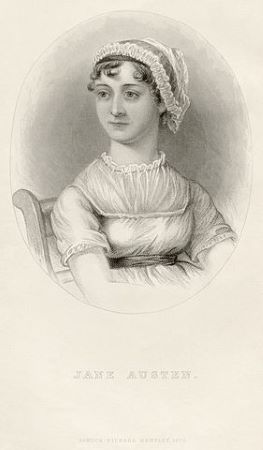
"It is a truth universally acknowledged, that a single man in possession of a good fortune must be in want of a wife." This famous line opens Jane Austen's 1813 novel Pride and Prejudice.
Austen's book follows the middle class Bennet family, comprised of two parents and five daughters, as they search for love, wealth, and marriage. A 19th century audience would likely connect with the importance placed on money, marriage, and love in the novel because of the social importance placed on the three at the time. Many important Pride and Prejudice quotes cover anywhere from one to all three of the subjects.
 |

Your next lesson will play in
10 seconds
Today, writing a whole book about the importance of making a good match for marriage might seem taboo. In 1813, however, the money and marriage quotes found throughout Austen's novel were spot on in importance, agreeance, and even comedy. Though many English citizens agreed with the general social and monetary structure lain out in Jane Austen's novel, few would have confessed it outright. Speaking about things like money and love, although the subjects were important, was considered harsh and impolite. This makes the opening line of Pride and Prejudice comically forward in its declaration, and an exciting start to a comedy of manners.
The final line of the novel, "Darcy, as well as Elizabeth, really loved them (Elizabeth's aunt and uncle); and they were both ever sensible of the warmest gratitude toward the persons who, by bringing her into Derbyshire, had been the means of uniting them," breaks the social construct once again by explaining a relationship between Darcy, a high-born man, and the Gardiners, Elizabeth's middle class family members.
Because of the highly classist societal ideals of the time, it would have been considered quite the scandal in 1813 England for a high-born man such as Darcy to make friends with Elizabeth's aunt and uncle, never mind his marriage to the middle-class Elizabeth Bennet in the first place. As such, this sentence wraps up the novel with a happy and determined tone, illustrating that it is agreed upon by both Darcy and Elizabeth that there is a happy ending to this story after all.
Mrs. Bennet's Quotes
Mrs. Bennet's quotes on money and marriage are often some of the most comically forward quotes in the novel. One of her most recognizable quotes occurs right after she learns of Mr. Bingley's move to their town. Mrs. Bennet, excited about the potential of such a wealthy suitor for her five unmarried daughters, says to her husband, "...single, my dear, to be sure! A single man of large fortune; four or five thousand a year. What a fine thing for our girls!" A 19th century English audience would likely find this type of outward expression shocking and a hilariously low thing to say.
Another of Mrs. Bennet's quotes is in response to one of her daughters' (Lizzy, to be precise, who is also the main character of the book), refusal of Mr. Collins's proposal. Mrs. Bennet says to Lizzy, "...if you take it into your head to go on refusing every offer of marriage in this way, you will never get a husband at all. And I am sure I do not know who is to maintain you when your father is dead." Since women could not inherit land or money in the 1800s, Mrs. Bennet was relying on one of her daughters to marry the heir to Mr. Bennet's estate, Mr. Collins. This is why she is so upset at Lizzy's refusal.
Marrying for Money Quotes
Most of the quotes which are here deemed 'marrying for money quotes' are driven by the will to keep the Bennet house after Mr. Bennet's death, and to support a widow-to-be and five unmarried young women. This was a concern common amongst other households both within the novel and at the time in 19th century England. It was also considered important to maintain a good family (and personal) reputation so that it was make possible connections to ensure a secure future for the whole family.
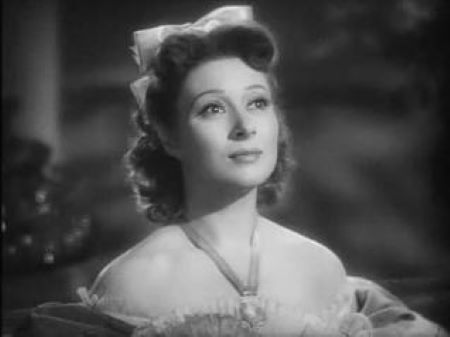
The main character, Elizabeth (Lizzy) Bennet, wishes to marry for love, not money, which is why she is shocked when her friend Charlotte accepts the proposal of Mr. Collins for herself. Charlotte defends herself to Lizzy, saying, "I am not romantic, you know. I never was. I ask only a comfortable home." Here, Charlotte represents the majority of young women in the 1800s, wishing for a comfortable life even at the expense of love. Most households would have agreed with Charlotte because marriage was, for young 19th century English women, the only way to ensure a comfortable future, as women could not inherit land or money themselves.
 |
Quite the opposite situation occurs when the youngest Bennet daughter, Lydia, runs off with Mr. Wickham, a money-hungry gambler and English officer. The family has to scramble to maintain both Lydia's reputation, and the family's overall reputation. The situation is finally resolved when Mr. Wickham eventually marries Lydia — after being paid to do so by Mr. Darcy.
While complaining about the situation to Lizzy, Mr. Bennet says, "...no man in his senses would marry Lydia on so slight a temptation as one hundred a year during my life, and fifty after I am gone... Wickham's a fool, if he takes her with a farthing less than ten thousand pounds. I should be sorry to think so ill of him in the very beginning of our relationship."
Pride and Prejudice Quotes: Mr. Darcy
Of the many Pride and Prejudice quotes, Mr. Darcy has only a few. Darcy, a man of thought over speech, speaks seemingly only when necessary. One of Darcy's most famous lines, however, occurs within his first proposal to Elizabeth Bennet. He says, "In vain have I struggled. It will not do. My feelings will not be repressed," to open his proposal before going on to describe the low and improper ways in which Lizzy's family acts, and the stoop he would take in marrying her. Elizabeth spurns him, stating that she would not have him stoop so low as to marry her, and then she walks away from him.
Relationship, money, and love quotes permeate the pages of Pride and Prejudice, and all of these themes spill over into the social class structure of England in the 1800s. The most distinguishable quotes are laid out in the following examples:
- "...agreeable when they chose it, but proud and conceited...had a fortune of twenty thousand pounds, were in the habit of spending more than they ought, and of associating with people of rank, and were therefore in every respect entitled to think well of themselves, and meanly of others."
This quote concerns the Miss Bingleys, who are the sisters of Mr. Charles Bingley. The sisters are described as having great wealth, which coincides with their social status and gains them several high-born friends.
- "Do not make yourself uneasy, my dear cousin, about your apparel. Lady Catherine is far from requiring that elegance of dress in us which becomes herself and her daughter. I would advise you merely to put on whatever of your clothes is superior to the rest — there is no occasion for anything more. Lady Catherine will not think the worse of you for being simply dressed. She likes to have the distinction of rank preserved."
In this quote, Mr. Collins instructs Lizzy on what to wear to dinner at Lady Catherine's house. Throughout the novel, Mr. Collins speaks highly of Lady Catherine, his noble neighbor, because he feels proud when someone of such great social status and wealth gives him attention.
- "...a fine figure of a man, the ladies declared he was much handsomer than Mr. Bingley, and he was looked at with great admiration for about half the evening."
Mr. Darcy is described in this last quote as handsomer than his friend Mr. Bingley, and this line comes just after he has been described as both wealthier and of higher birth than Mr. Bingley. Austen appears to point out the correlation for 19th century English citizens between money and attractiveness in this line.
Jane Austen's 1813 novel Pride and Prejudice explores the customs of 19th century English society, specifically regarding money, love, and marriage. Austen's book has become widely popular around the world, and some famous Pride and Prejudice quotes have the ability to make even a 21st century reader chuckle. From the very first quote of the book, "It is a truth universally acknowledged, that a single man in possession of a good fortune must be in want of a wife," to the last, "...Darcy as well as Elizabeth really loved them...who, by bringing her into Derbyshire, had been the means of uniting them," Austen's story follows love's journey through a sea of social classes, wealth, and scandal.
All classes and means of person are included in the book; from Mr. Wickham, who marries Lydia Bennet for money; to Mr. Collins, who praises Lady Catherine for taking him under her wing; to the Bingley sisters, who are described as "agreeable when they chose it, but proud and conceited..." Mrs. Bennet's quotes are generally the most humorous because of their blatant disregard for social class, but, of all the Pride and Prejudice quotes, Mr. Darcy has perhaps the most distasteful, which occurs during his first proposal to Elizabeth Bennet. From Lydia marrying for looks, to Charlotte marrying for comfort and stability, and Lizzy for love, Jane Austen's Pride and Prejudice represents all types of matches found in the English upper/middle class of the time.
Video Transcript
Money in Pride and Prejudice
Great obstacles are essential to great love stories. Would we remember Romeo and Juliet if their families had been friendly? Or Lancelot and Guinevere if she hadn't been King Arthur's wife? Or Elizabeth and Darcy if they had been of equal wealth and social status?
As we see in Pride and Prejudice, during the Regency period in England wealth and status defined relationships. It was rare, even unseemly, for a rich, upper class gentleman to marry a middle class woman. Although Lady Catherine is more interested in arranging her own daughter's marriage to Darcy, her objection to a marriage between Darcy and Elizabeth is consistent with social norms of the period. She makes her case clear when she says, referring to her daughter and Mr. Darcy:
''They are descended, on the maternal side, from the same noble line; and, on the father's, from respectable, honorable, and ancient—though untitled—families. Their fortune on both sides is splendid.''
Let's take a closer look at other quotes about money in Pride and Prejudice as it relates to marriage and social class.
Money and Marriage
''It is a truth universally acknowledged, that a single man in possession of a good fortune must be in want of a wife.''
This famous first line of Pride and Prejudice sets up the story's themes of money and marriage that drive much of the plot. In this period, money played a particularly important role for women because they could not, by law, inherit money. Therefore, Mr. Bennet's entire estate would go to his male cousin Mr. Collins with nothing to go to Mrs. Bennet or the five Bennet daughters. With limited career options, women had to look to marriage for financial security.
So, when the Bingleys first move to Netherfield Park, Mrs. Bennet wastes no time in trying to convince her husband that Mr. Bingley would be a perfect match for one of their daughters. Declaring to her husband that Mr. Bingley is indeed:
''…single, my dear, to be sure! A single man of large fortune; four or five thousand a year. What a fine thing for our girls!''
After Jane Bennet charms Mr. Bingley, Mrs. Bennet tries to steer Mr. Collins toward Elizabeth, when he seeks a wife among the Bennet daughters. Much to her mother's dismay, Elizabeth declines Mr. Collins' proposal because she intends to hold out for love.
When Mr. Collins turns to her friend Charlotte, who accepts his proposal, Elizabeth is shocked. Charlotte explains her pragmatic view:
''I am not romantic, you know. I never was. I ask only a comfortable home.''
Meanwhile, Mr. Darcy is falling for Elizabeth, but he knows he is expected to marry a woman in his own class. He begins his first proposal to Elizabeth by saying:
''In vain have I struggled. It will not do. My feelings will not be repressed.''
He then goes on to explain why her family relations have made it so difficult to accept his feelings for her. In the end, his proposal offends her and she rejects it feeling only:
''…his sense of her inferiority—of its being a degradation—of the family obstacles which judgment had always opposed to inclination.''
Later, Mr. Bennet is surprised by the news that Mr. Wickham will marry Lydia Bennet. Mr. Bennet tells Elizabeth:
''…no man in his senses would marry Lydia on so slight a temptation as one hundred a year during my life, and fifty after I am gone… Wickham's a fool, if he takes her with a farthing less than ten thousand pounds. I should be sorry to think so ill of him in the very beginning of our relationship.''
Money and Social Class
Money is associated with social status, which clearly affects people's attitudes during the novel. When we first meet Mr. Darcy we quickly learn that he is very wealthy, more so even than Mr. Bingley. That quite probably influenced the popular first impression that Darcy is:
''…a fine figure of a man, the ladies declared he was much handsomer than Mr. Bingley, and he was looked at with great admiration for about half the evening.''
The Miss Bingleys seem to feel they are above all others because they have money and flaunt it in their spending habits. They are described as being able to make:
''…themselves agreeable when they chose it, but proud and conceited… had a fortune of twenty thousand pounds, were in the habit of spending more than they ought, and of associating with people of rank, and were therefore in every respect entitled to think well of themselves, and meanly of others.''
Mr. Collins has an interesting relationship to money and class. He's not very wealthy, but he admires money and goes out of his way to praise his patroness, Lady Catherine, and her fine things. He's also quick to mention their relationship to others, seeming to bask in reflected glory. His attitude toward her is demonstrated in this quote:
''Do not make yourself uneasy, my dear cousin, about your apparel. Lady Catherine is far from requiring that elegance of dress in us which becomes herself and her daughter. I would advise you merely to put on whatever of your clothes is superior to the rest—there is no occasion for anything more. Lady Catherine will not think the worse of you for being simply dressed. She likes to have the distinction of rank preserved.''
Lesson Summary
Money plays an important role in Pride and Prejudice. It leads to marriages, the disruption of hopeful marriages, and the general attitudes of many of the characters in Pride and Prejudice. Many quotes about money show how it's important in making marriages, and why marriage is so important to many of the women. We also see how money causes many characters to become prideful.
Register to view this lesson
Are you a student or a teacher?
Unlock Your Education
See for yourself why 30 million people use Study.com
Become a Study.com member and start learning now.
Become a MemberAlready a member? Log In
BackResources created by teachers for teachers
Over 30,000 video lessons
& teaching resources‐all
in one place.


I would definitely recommend Study.com to my colleagues. It’s like a teacher waved a magic wand and did the work for me. I feel like it’s a lifeline.
Jennifer B.
Teacher

Back

Pride and Prejudice Quotes | Money, Marriage & Social Class Related Study Materials
Explore our library of over 88,000 lessons
Browse by subject