
Learn about theropod dinosaurs, theropods of lower classifications, and different categories of dinosaurs classified as heaviest and lightest dinosaurs.
Therapods | Definition, Classification & Examples
Table of Contents
- What is a Theropod?
- Theropods Lower Classifications
- Theropod Dinosaurs
- Examples of Theropods
- Lesson Summary
Frequently Asked Questions
What type of dinosaur is a theropod?
Theropod dinosaurs are obligate bipedal dinosaurs from the Order Saurischia. Theropods include species which gave rise to modern extant bird species.
Are birds theropods?
Birds evolved from avian type theropods form the Coelurosauria clade. Coelurosaurian species which gave rise to birds possessed avian type features such as arm elongation and a feathery body covering.
Is T. rex a theropod?
Tyrannosaurus rex is an example of a theropod dinosaur from the Coelurosauria clade of theropods. Tyrannosaurus rex is characterized by sharp, curved teeth, short forelimbs, and short, deep jaws.
What dinosaurs are in the theropod family?
Theropod dinosaurs include larger carnivorous species such as Tyrannosaurus rex and Spinosaurus along with smaller avian type species such as Archaeopteryx.
How many theropods are there?
There are over 10,500 extant birds species which are theropods, along with a diverse number of dinosaur fossil species such as Tyrannosaurus rex and Allosaurus.
Table of Contents
- What is a Theropod?
- Theropods Lower Classifications
- Theropod Dinosaurs
- Examples of Theropods
- Lesson Summary
In popular movies and television shows, theropods such as Tyrannosaurus rex are portrayed as clever, carnivorous dinosaurs with an appetite for actively hunting their prey. In reality, however, theropod dinosaurs represent a broad group of bipedal dinosaurs from the saurischian order of dinosaurs. Therapods from the Suborder Theropoda are identified by several common traits, including:
- Hollow bones which are tubular in structure
- Reduction in the size of the fourth and fifth digits
- Digits with sharp claws
- Three weight-bearing toes on the feet
- Sharp, recurved teeth as an adaptation for carnivory
Theropods are first found during the late Triassic as largely carnivorous dinosaurs but evolved over time to include herbivorous, omnivorous, piscivorous, and insectivorous species. During the Jurassic, birds evolved from smaller theropods and are represented today by over 10,500 extant species.
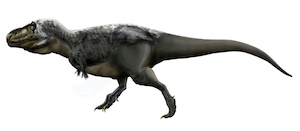 |
Theropod Definition
Theropods represent a diverse group of obligate bipedal dinosaurs from the saurischian, or 'lizard-hipped,' group of dinosaurs. Theropods include some of the largest terrestrial carnivores, such as Tyrannosaurus rex and Spinosaurus maroccanus, as well as smaller species like Archaeopteryx and Velociraptors. Unlike their larger, carnivorous counterparts, smaller theropod species utilized a variety of dietary strategies, including herbivory and omnivory.
The Suborder Theropoda contains several infraorders, including Ceratosauria, Carnosauria, and Coelurosauria. The Infraorder Ceratosauria contains some of the larger examples of theropods such as Megalosaurus and Spinosaurus. Larger carnivorous species are also found within the Infraorder Carnosauria, such as Allosaurus. A combination of small and large theropods are found within the Coelurosauria Infraorder, such as Compsognathus, which represents one of the smallest examples of theropods, with an adult size comparable to a chicken or turkey. Tyrannosaurus rex also represents one of the more famous examples of a Coelosaur. Coelurosauria also contain all of the extant bird species found on Earth today.
Theropod dinosaurs come in a wide range of sizes from some of the largest dinosaurs to have walked on Earth to smaller dinosaurs which eventually evolved into modern birds. Although Tyrannosaurus rex was long considered to be the largest theropod, paleontologists have since discovered new species, such as Carcharodontosaurus, which weighed in at 33,345 pounds, and Gigantosaurus, also hefty at 30,438 pounds. The smallest non-avian theropods include Microraptor zhaoianus and Anchiornis huxleyi, which were roughly the size of a small bird, weighing in at 110 grams.
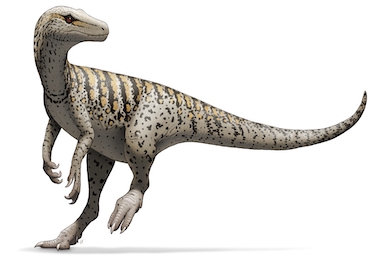
Herrerasaurus
The Genus Herrerasaurus contains some of the earliest dinosaur species found in the fossil record. A majority of the species found in this genus were discovered in northwestern Argentina in the Ischigualasto Formation and are considered to be examples of early saurischian dinosaurs. Roughly 3 to 5 meters in length, Herrerasaurus was a small carnivorous dinosaur which fed on small and medium sized animals. Herrerasaurus possessed strong hind limbs with adaptations indicative of swift running abilities, such as short thighs and long feet. Weighing around 400 pounds, Herrerasaurus was not the largest dinosaur during the Triassic, but its hunting abilities made it a considerable foe for other dinosaurs of the same period.
 |
Ceratosaurus
Ceratosaurus translates as 'horned lizard' and derives it names from the row of sharp horns and armor on its head and back. With an estimated length of 6 to 7 meters and a weight of up to 1,200 pounds, Ceratosaurus represented one of the largest hunting dinosaurs of the late Triassic and Jurassic Periods. Possessing short forelimbs and long, muscular legs with three toes, Ceratosaurus was a swift runner with thin, blade-like teeth that were adapted for slicing through meat.
 |
Tetanurae
Tetanurae is large group of theropod dinosaurs which possessed some of the most common morpohological characteristics found in theropods, such as a reduction in the fourth and fifth digits in the hands and the presence of a less flexible tail. Two of the most well-represented groups of Tetanurae include the Carnosauria and the Coelurosauria.
Carnosauria
Carnosaurs are named for their dietary strategy as meat eaters. Carnosaurs are characterized by several morphological adaptations including an overall increase in size, modifications of the pelvis and hind legs, large orbits, and a long, narrow skull. Some well-known examples of Carnosauria include Allosaurus, Spinosaurus, and Megalosaurus.
 |
Coelurosauria
Coelurosauria contains the theropod dinosaurs most closely related to extant birds. Some of the main characteristics of Coelurosauria include arm elongation, hinge-like ankles, and either a fuzzy or feathery body covering. Coelurosauria are divided into three categories:
Maniraptora: birds and other coelurosaurs
- Long forelimbs (arms)
- Three-fingered hands
- Semi-lunate (half-moon shaped) bone in the wrist
- Fused clavicle and sternum
- Shortened, distally stiffened tail
Ornithomimidae: bird-like coelurosaurs
- Long forelimbs (arms)
- Long, slim hindlimbs (legs)
- Clamping hands
Tyrannosauridae: giant coelurosaurs
- Short deep jaws
- Sharp, curved teeth
- Short forelimbs (arms)
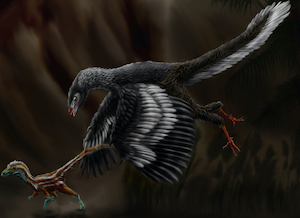
Coelurosauria include famous species such as Tyrannossaurus rex and Archaeopteryx.
 |
Theropods are carnivorous, bipedal dinosaurs from the saurischian order. Although originally carnivorous hunters which preyed upon other contemporaneous dinosaurs of the Triassic and Jurassic periods, theropods eventually evolved to include species which utilized herbivorous, omnivorous, and piscivorous dietary strategies. Characterized by sharp, curved teeth, three-toed feet, digits with sharp claws, and long, hollow bones, theropods included a diverse range of body sizes, from large, terrestrial dinosaurs such as Megalosaurus and Allosaurus to smaller, bird-like species like microraptors. Theropods include several clades such as Herrerasaurus, Ceratosaurus, and Tetanurae. Tetanurae dinosaurs include famous Carnosaurs and Coelurosaurs such as Tyrannosaurus rex and Archaeopteryx, as well as other species which gave rise to modern bird species.
Additional Info
Definition
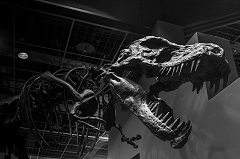
The most terrifying dinosaurs to walk the earth were theropods. Theropods (meaning 'beast-footed') are of the order of saurischian ('lizard-hipped') dinosaurs. They were carnivorous, bipedal dinosaurs that had hands with five fingers that could grasp things. While dinosaurs are extinct, their descendants are birds that still exist today. In addition to their sharp teeth and claws, these dinosaurs are known for having hollow bones. Let's look at some examples of theropods.
 |
Herrerasaurus
The Herrerasaurus ('Herrera's lizard') was one of the first known theropods. Similar to other theropods, it was bipedal, had long claws extending from its fingers, and had long, sharp, serrated teeth. Furthermore, its hinged jaws could effectively hold its prey. Its lower arm and wrist bones are similar to those of birds. While you might not want to run into one of these creatures, they were not the most dangerous predator of their time. Standing four feet tall and weighing about 460 pounds, these dinosaurs had much larger carnivores to deal with. Herrerasaurus lived in the Triassic period, which was about 230 million years ago. Fossils of this dinosaur have been found in Argentina in South America.
Ceratosaurus
Ceratosaurus ('horned lizard') was a large carnivore from the Jurassic Period, which was about 150 million years ago. This dinosaur was 15-20 feet long and weighed about a ton. One of its most prominent features was a horn on its snout and ridges above its large eyes. This theropod only had four clawed fingers per hand. Ceratosaurus were highly intelligent dinosaurs who worked in groups to outwit their prey, which was likely iguanodonts, stegosaurs, and sauropods. In addition to being a hunter, it may also have been a scavenger. This dinosaur was bipedal and may have been a good swimmer as well because of its long tail.
Tetanurae
Tetanurae are theropods that have large hands, an inflexible tail, and only have three or four fingers. There are two subgroups of tetanurae: carnosauria and coelurosauria.
Carnosauria
Carnosauria ('meat-eating lizards') were some of the most dominant dinosaurs of the Jurassic period. Having evolved from earlier theropods, these much larger dinosaurs had a more pronounced femur, large eyes, and a narrow skull. Allosaurus is the best-known carnosaur. Their talons, claws, strong jaws, and sharp teeth made them effective hunters.
Coelurosauria
Coelurosauria are most closely related to modern birds. They are known for their long arms and hinged ankles. There is still much to learn about this group of animals, which often involves reclassification. There are three categories of coelurosauria:
- Maniraptora, which includes velociraptors.
- Ornithomimidae, which includes bird-like coelurosauria.
- Tyrannosauridae, which includes the largest coelurosauria, such as the Tyrannosaurus rex.
Lesson Summary
Theropods come from the order of saurischian dinosaurs. These are bipedal carnivores with grasping fingers, sharp teeth, and clawed hands and feet. While dinosaurs are extinct, their descendants, birds, share their hollow bones. The oldest theropod is Herrerasaurus, who lived in Argentina during the Triassic period. These dinosaurs weighed less than 500 pounds. Next, came the Ceratosaurus during the Jurassic period. The Ceratosaurus weighed about a ton. Tetanurae are divided into two groups: Carnosauria and Coelurosauria. Allosaurus is a Carnosauria. Tyrannosaurus rex and Velociraptor are Coelurosauria. Coelurosauria have most in common with birds.
Register to view this lesson
Are you a student or a teacher?
Unlock Your Education
See for yourself why 30 million people use Study.com
Become a Study.com member and start learning now.
Become a MemberAlready a member? Log In
BackResources created by teachers for teachers
Over 30,000 video lessons
& teaching resources‐all
in one place.


I would definitely recommend Study.com to my colleagues. It’s like a teacher waved a magic wand and did the work for me. I feel like it’s a lifeline.
Jennifer B.
Teacher

Back
Therapods | Definition, Classification & Examples Related Study Materials
Explore our library of over 88,000 lessons
Browse by subject