
Read the Animal Farm chapter 1 summary and explore its setting and themes. Learn the Animal Farm animals, their role in the plot, and what they represent.
Animal Farm Chapter 1 | Summary, Characters & Themes
Table of Contents
- Animal Farm Chapter 1 Summary
- Characters Introduced in Animal Farm Chapter 1
- Themes Present Throughout Chapter 1 of Animal Farm
- How Does Chapter 1 Set the Tone for Animal Farm?
- Lesson Summary
Frequently Asked Questions
What happened in the beginning of Animal Farm?
In the beginning of Animal Farm, Old Major, a pig, holds a meeting to discuss the oppression of the animals. He says all of their problems stem from humans, but that he envisions freedom for the animals in their future. He also teaches the animals their anthem, "Beasts of England."
What animals are introduced in Chapter 1 of Animal Farm?
Several key animals are introduced in the first chapter of Animal Farm. Old Major, a pig who inspires the rebellion, calls a meeting. There, the three horses Boxer, Clover, and Mollie, are introduced, as well as the two dogs, Jessie and Bluebell, Muriel the goat, Benjamin the donkey, and Moses the raven.
What is Chapter 1 of Animal Farm about?
In Chapter 1 of Animal Farm, the animals gather and listen to Old Major, a pig, give a speech about how the humans are oppressing the animals. He tells the other animals that he hopes for freedom, and he teaches them the song "Beasts of England." This inspires the animals on the farm to plan a rebellion.
Table of Contents
- Animal Farm Chapter 1 Summary
- Characters Introduced in Animal Farm Chapter 1
- Themes Present Throughout Chapter 1 of Animal Farm
- How Does Chapter 1 Set the Tone for Animal Farm?
- Lesson Summary
Animal Farm , published in 1945, was written by George Orwell. It is a dystopian novel, meaning it depicts an imagined society undergoing suffering at the hands of an oppressive government. Orwell gathered his inspiration for his novel from the Russian Revolution, which began in 1917. Each of the Animal Farm animals represents a person or group of people directly involved with the revolution.
In the novel, the farm animals rebel against their human owner, Mr. Jones. Initially, daily activities ran smoothly on the farm, and the animals were motivated by their freedom to work harder. However, as time progresses, the pigs, who are the smartest and therefore act as leaders of the group, take advantage of the other animals, thus becoming the new oppressors. By the end of the novel, the conditions for the animals in Animal Farm are worse than they were when humans first managed the farm.
Orwell's work is a political commentary that expresses his negative views on the Russian Revolution. He uses sarcasm in his writing; particularly in his usage of farm animals to represent key political figures and social groups. The animals in his novel are anthropomorphized, or they are assigned human characteristics as a means to convey human concepts and emotions. The novel is set on a fictitious farm called Manor Farm in England. No year is specified; however, the novel is allegorical to the Russian Revolution, which spanned from 1917 – 1945.
The Animals Gather
Chapter 1 of Animal Farm begins with the animals congregating in the large barn on the farm after Mr. Jones has gone to bed. Old Major, an old boar on the farm, had a dream that he wants to tell the others about.
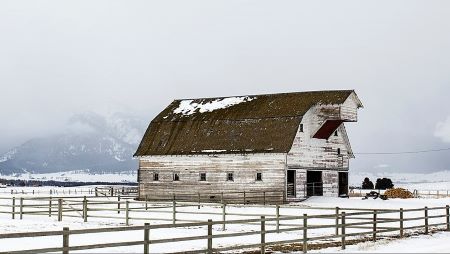 |
There is a platform at the end of the barn, where Old Major waits to address his audience. The other animals on the farm file in and take their places.
Old Major Speaks
Old Major addresses the animals as "comrades." He tells them that he feels it is his responsibility to pass on his wisdom to others before he dies. He says that they have miserable lives, where they suffer from cruelty and slavery. Old Major tells the other animals that humans are their primary enemy. As he says: "Man is the only creature that consumes without producing." The animals labor, while the humans merely take and consume the fruits of their labor.
He also points out that most of the animals on farms do not get the chance to live into old age, saying: "You young porkers who are sitting in front of me, every one of you will scream your lives out at the block within a year. To that horror we all must come — cows, pigs, hens, sheep, everyone. Even the horses and the dogs have no better fate."
Old Major declares that the only solution is to start a rebellion against the humans. He tells them, "Only get rid of Man, and the produce of our labor would be our own. Almost overnight we could become rich and free."
Beasts of England
Once Major finishes his call for a rebellion, he tells the animals that the dream he had, which he does not describe, reminded him of a song he learned when he was young. The song is called "Beasts of England", and it goes:
"Beasts of England, beasts of Ireland,
Beasts of every land and clime,
Hearken to my joyful tidings
Of the golden future time.
Soon or late the day is coming,
Tyrant Man shall be o'erthrown,
And the fruitful fields of England
Shall be trod by beasts alone.
Rings shall vanish from our noses,
And the harness from our back,
Bit and spur shall rust forever,
Cruel whips no more shall crack.
Riches more than mind can picture,
Wheat and barley, oats and hay,
Clover, beans, and mangel-wurzels
Shall be ours upon that day.
Sweeter yet shall blow its breezes
On the day that sets us free.
For that day we all must labour,
Though we die before it break;
Cows and horses, geese and turkeys,
All must toil for freedom's sake.
Beasts of England, beasts of Ireland,
Beasts of every land and clime,
Hearken well and spread my tidings
Of the golden future time."
The animals' singing wakes up Mr. Jones, and he fires his gun at the barn. The animals disperse and go to bed.
Several important characters are introduced in Chapter 1, although some key characters are not introduced until later in the novel. The main characters in the first chapter are Mr. Jones and several Animal Farm animals, including Old Major, Boxer, Clover, Mollie, Jessie, Bluebell, and Pincher, Benjamin, Muriel, and Moses. They are discussed below.
Mr. Jones
Mr. Jones is the owner of Manor Farm, which was renamed Animal Farm after the rebellion. He is an alcoholic, and his affliction results in his poor management of the farm. As Mr. Jones is the first oppressor of the animals, he symbolizes Tsar Nicholas II, the Russian leader who abdicated the throne at the beginning of the Russian Revolution.
Old Major
Old Major is a prize-winning boar. He is 12 years old, and he is one of the wisest animals on the farm. His speech inspires the other animals to plan, and later take part in, a rebellion against the humans.
Old Major symbolizes Karl Marx. Karl Marx introduced the concept of socialism. The leader of the Revolution, Vladimir Lenin, used Marxist ideas in his platform.
 |
Boxer
The hardest working member of Animal Farm is a cart-horse named Boxer. He is described as "an enormous beast, nearly eighteen hands high, and as strong as any two ordinary horses out together. A white stripe down his nose gave him a somewhat stupid appearance, and he was not of first-rate intelligence, but he was universally respected for his steadiness of character and tremendous powers of work."
Throughout the novel, Boxer works harder than any of the other animals. He believes in Animal Farm and is trusting of the pigs, who later assume the role of oppressive leaders. Boxer represents the working-class Russian citizens, who supported the Revolution.
Clover
Clover is the other cart horse that lives on the farm. She is a middle-aged mare, and she is a maternal figure on the farm.
Clover is a hard worker, and she believes in the rebellion. However, by the end of the novel, she realizes that the pigs have become the new oppressors. Like Boxer, Clover is a representation of the working class.
Mollie
Mollie is the third horse on Manor Farm. She is a pretty white horse, and she is foolish and self-centered. She is overly fond of ribbons and sugar cubes, and since she is a spoiled favorite, she does not have the same dislike for the humans that the other animals have. Not long after the rebellion, Mollie runs away to a human-run farm.
The spoiled and selfish Mollie is symbolic of the Russian bourgeoisie, or capitalists.
Other Animal Farm Animals
A few other important characters are introduced in Chapter 1. These animals include:
- Benjamin: He is a donkey and the oldest animal on the farm. He avoids expressing an opinion on the rebellion. His character represents intellectuals who did not speak out against Stalin.
- Muriel: Muriel is a goat. She is one of the smarter animals, and she learns to read.
- Jessie and Bluebell: They are farm dogs. They have puppies that are later taken and raised to act as a personal army to Napoleon, the pig that becomes the totalitarian leader of Animal Farm.
- Moses: Moses, a raven, is Mr. Jones's pet. He stays on the farm and helps spread the concept of the rebellion to animals outside the farm. His character symbolizes religion.
Several themes are found within the first chapter of Animal Farm.
Oppression
Oppression is one of the strongest themes woven throughout the novel. In the first chapter, the animals are oppressed by Mr. Jones and the other humans. They must perform back-breaking work, but the humans receive all the benefits. They are unhappy, and they want to break free from their oppressors.
Rebellion
Old Major inspires the other animals to rebel against the humans. He believes that the animals will run things fairly and become rich only if they rebel against their oppressors. Old Major continually talks about the need to overthrow humans and give a good life to the animals. He was a great speaker and chose words such as miserable, comrades, and our just to pull the hearts of the animals. His emotive approach makes animals set for the task.
Hope
The animals must retain a firm hope for their future. They are miserable in their current conditions, but Old Major's speech gives them hope, which later motivates their physical rebellion in Chapter 2.
Chapter 1 of Animal Farm represents the typical start of a dystopia with the twist of animals conspiring against their human leaders. Although the tone starts trivially, it builds bitterness as it progresses. However, in this chapter of Animal Farm, the tone is set as hopeful and idealistic. The animals on Mr. Jones's farm are tired of mistreatment and dream of a better life where they are free and equal. Old Major inspires them with a vision of rebellion against humans to establish a fair and just society. The tone is one of optimism and a longing for freedom. However, underlying this hopefulness is a sense of tension and foreshadowing. It hints at the challenges and conflicts that may arise in their pursuit of a utopian society.
Animal Farm is a dystopian novel that uses sarcasm and anthropomorphism (human traits given to non-human characters) to criticize the Russian Revolution that lasted from 1917–1945. It was written by George Orwell and published in 1945. Animal Farm is about a group of farm animals that rebel against their human owners and take over the farm. At first, conditions are better than they were under the human oppressors, but things devolve and the animals become more oppressed under the rule of the pigs than they were under the humans.
In Chapter 1, Old Major, an old boar on the farm, gathers the animals in the barn to tell them about a dream he had. He preaches that the animals are living in deplorable conditions and that the enemy is humankind. He urges the animals to rebel, and he teaches them the song "Beasts of England". As the animals sing, Mr. Jones, the farmer, wakes up and shoots at the barn, breaking up their meeting. Several key characters are introduced in the first chapter, such as Old Major (representing Karl Marx); Mr. Jones (representing Tsar Nicholas II); Boxer and Clover, who are cart horses that symbolize the middle class; Mollie, a selfish horse who represents capitalists; Benjamin the donkey; Muriel the goat; Moses, the raven; and Jessie and Bluebell, the farm dogs. Prominent themes in Chapter 1 include oppression, rebellion, and hope.
Additional Info
The Stage is Set
What happens when farm animals want rights? In Chapter 1 of Animal Farm by George Orwell, the stage is set for dissension as the residents of Manor Farm begin to dream of a better life without human interference.
George Orwell, perhaps in a critical attempt to analyze and expose the effects of totalitarianism, anthropomorphizes a group of farm animals in the political satire Animal Farm. Anthropomorphism is when non-human entities are given human attributes. Satire, on the other hand, is a form of humor that ridicules the folly of man. In Chapter 1, many of the novella's characters, who are mainly farm animals, are introduced. Let's take a look at how the chapter unfolds!
 |
Old Major Calls a Meeting
When the story opens, Mr. Jones, the owner of Manor Farm, has gotten so drunk that he has forgotten to secure the animals before going to bed for the night. As a result, Old Major, the highly-respected prize boar, calls a meeting in the barn for all the animals.
Old Major has already taken his place of prominence on a bed of straw under a lantern as the animals all come forth to hear what he has to say. The dogs, pigs, hens, pigeons, horses, sheep, cows, goats, and Benjamin (the donkey) all assume their places. Benjamin complains about most things, but he is loyal to the horse, Boxer, who walks in with Clover, the motherly mare. Boxer is well-respected for his work ethic and character, but he is not very smart and rarely thinks for himself.
When the ducklings, who are without a mother, walk in, Clover takes care of them by finding a safe place for them to sit next to her. Mollie, the narcissistic mare, enters toward the end of the gathering, drawing attention to her beautiful ribbons. The cat walks in last and finds a warm place to sit, but seems disinterested in listening to Old Major. The only animal that does not show up is the tame raven, Moses.
The Message
Old Major feels he is approaching the end of his life and needs to impart wisdom on the other animals. He believes that animals are treated as slaves. They work to feed the humans, for instance, and give the humans everything they have, including their offspring; but in the end, when the animals become old and useless, they are killed. 'Man is the only real enemy we have,' says Old Major. 'Remove man from the scene and the root cause of hunger and overwork is abolished forever.'
Old Major offers fearful prophecies, warning each animal what his or her fate will be so long as Man is in charge of the farm. He speaks with Clover about having her children taken away, and he tells the pigs they will be slaughtered for meat before the end of the year. Old Major believes that the only way animals will ever live the life they deserve is if they overthrow the humans. There is cheering from the animals as they listen to his message, but when the rats come in to hear more, the dogs chase them out of the barn. The animals put it to a vote and determine that rats are comrades, too. Only the cats and dogs disagree.
 |
The Rules
Old Major clearly states that the enemy stands on two legs. All animals with four legs, or with wings, are equal and may not kill each other. Old Major further warns the animals: to overthrow the humans, they need to be careful not to start acting like them by sleeping in beds, drinking, smoking, wearing clothes, living in houses, or using money. The animals need to stand together.
Old Major tells the other animals about a dream he had regarding a world without humans. It reminds him of a song that his mother used to sing to him called 'Beasts of England.' The lyrics of the song reference a perfect animal society after Man has been overthrown. The animals sing the song over and over until Mr. Jones fires a gunshot into the barn to quiet them.
Lesson Summary
In the first chapter, many of the characters are introduced.
- Mr. Jones is the owner of Manor Farm. From the first paragraph, we learn that when he drinks too much, he shirks his duties. He forgets to shut the pop-holes, which allows the animals to gather for a meeting. Pop-holes are spaces in the fence that allow animals to freely pass from one area to another. When the animals get too loud, he handles them by firing a single shot into the barn. Mr. Jones represents the oppressive dictator that takes advantage of the animals.
- Old Major is a prize boar. He is well-respected among the animals. They are willing to sacrifice sleep to listen to what he has to say.
- Boxer is a strong, but not particularly intelligent horse. He is well-respected for his character and work ethic. He often spends time with Benjamin.
- Clover is a middle-aged, motherly mare.
- Benjamin is the old, cynical donkey who is always complaining about something. Benjamin frequently spends time with Boxer.
- Mollie is the foolish, pretty white mare who is always drawing attention to her beauty.
- Moses is the domesticated raven. He does not show up for the meeting.
Old Major has a vision of a better life for animals. He gathers all of the animals and shares his dream of a life without Man. The animals become excited and start creating a foundation for coming together to make this dream a reality. The chapter closes with the animals singing their new anthem for a better world controlled by animals until Mr. Jones shuts them down with a single gunshot fired into the barn.
Register to view this lesson
Are you a student or a teacher?
Unlock Your Education
See for yourself why 30 million people use Study.com
Become a Study.com member and start learning now.
Become a MemberAlready a member? Log In
BackResources created by teachers for teachers
Over 30,000 video lessons
& teaching resources‐all
in one place.


I would definitely recommend Study.com to my colleagues. It’s like a teacher waved a magic wand and did the work for me. I feel like it’s a lifeline.
Jennifer B.
Teacher

Back
Animal Farm Chapter 1 | Summary, Characters & Themes Related Study Materials
Explore our library of over 88,000 lessons
Browse by subject