
Review a summary of the Iran-Iraq War and view a timeline of the war. Learn about the Iran-Iraq War causes, the history of Iran and Iraq, and the war's aftermath.
Iran-Iraq War | Summary, Causes & Timeline
Table of Contents
- Iran-Iraq War Summary
- History of Iran & Iraq
- Iran-Iraq War Timeline
- Iran-Iraq War Aftermath
- Lesson Summary
Frequently Asked Questions
How did the Iran-Iraq war end?
The Iran-Iraq War ended in an UN-brokered ceasefire in 1988. After Iraqi forces pushed the Iranian army out of Iraq, neither country had the will nor the economic resources to continue the war.
Why did Iraq and Iran go to war?
Iraq invaded Iran in 1980 to gain full control of the Shatt al-Arab river, conquer Iran's oil-rich province of Khuzestan, and take advantage of Iran's weakness and isolation following the Iranian Revolution of 1979. The new Iranian government also repeatedly called for Iraqis to overthrow the Iraqi government and establish an Islamic republic. After pushing the invading Iraqi army out of Iran, the Iranians continued the war for years to overthrow the secular Iraqi government.
Who was the winner of the Iran-Iraq war?
There was no clear winner in the Iran-Iraq War. Iraq had failed in its primary territorial goals, but it had successfully established itself as the most powerful military in the Arab world. Iran successfully defended its territory, but it failed to overthrow Saddam Hussein, which had been Iran's main reason for prolonging the war after 1982. Neither country fully recovered from the economic devastation caused by the war.
Table of Contents
- Iran-Iraq War Summary
- History of Iran & Iraq
- Iran-Iraq War Timeline
- Iran-Iraq War Aftermath
- Lesson Summary
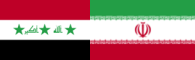
The Iran-Iraq War was a war between Iran and Iraq that lasted from September 22, 1980, to August 20, 1988. The war began when Iraq, under dictator Saddam Hussein, invaded Iran under Ayatollah Khomeini to gain control of the Shatt al-Arab river, annexing the oil-rich Iranian province of Khuzestan, and permanently weakening the Iranian military. The war ended in a stalemate and a UN ceasefire with no side gaining any meaningful victory. The death toll from the war was high but uncertain. Most estimates put the total death toll at 500,000 soldiers, with similar numbers for both sides. However, other sources put the number of dead at over a million. Over 100,000 civilians were killed in the fighting as well.
 |

Your next lesson will play in
10 seconds
Iraq became an independent nation in 1932 under the rule of a British-appointed monarch, Faisal I. Historically, a major tension between Iraq (or rather, whoever ruled Iraq) and Iran was the Shatt al-Arab river that separated the two Southern regions. The Shatt al-Arab is the river formed by the merging Tigris and Euphrates rivers. In 1937, the two countries signed a treaty placing the border at the deep mark of the river. However, due to the uneven terrain of the river bottom, Iranian ships had to move onto the Iraqi side of the river to reach the Persian Gulf, resulting in Iraq charging tolls for them to pass.
In 1958, the socialist Ba'ath party overthrew the Iraqi monarchy and established a republic. Over the next two decades, the Iraqi government went through multiple coups, with each subsequent leader becoming more nationalistic and militant in their efforts to gain support. These efforts included attempts to incite a revolt in the Iranian region of Khuzestan. In the 1970s, Iraq came under the rule of dictator Saddam Hussein, who formalized his power when he became president of Iraq in 1979.
In 1969, after a decade of significant military buildup, Iran pulled out of the 1937 treaty and refused to pay any further tolls to Iraq for passage through the river. Iraq was far weaker than its neighbor, so it had no choice but to accept Iran's position. Iraq would dedicate the next decade to upgrading its military to compete with Iran. For the next few years, both countries funded and armed insurrections in the other country, prompting Iraq to invade Iran in 1975. Iran quickly defeated the Iraqi invasion, and the two countries signed another treaty, the Algiers Agreement. This treaty allowed Iranian passage through the river while both countries agreed to end their support of rebellions in the opposite country.
Iran-Iraq War Causes
Another major change in Iraqi-Iranian relations came in 1979 with the Iranian Revolution, which overthrew the Western-backed Iranian monarchy and replaced it with an Islamic theocracy. The new government, under Ayatollah Khomeini, made enemies of both the United States and the Soviet Union, leaving the country without any significant international support. With Iraq's biggest enemy suddenly weakened and thrown into chaos, Saddam Hussein saw an opportunity to strike.
Iran had isolated itself from much of the world, and it had ramped up its hostile rhetoric against Iraq. Khomeini fundamentally opposed Saddam Hussein and the ruling Ba'ath party due to their secularism, calling on Islamists in Iraq to overthrow the government and establish an Islamic republic like Iran.
Saddam Hussein prepared for war with several goals in mind. He wanted to undo the concessions from the 1975 Algiers Agreement, which he saw as a humiliation for Iraq, and reclaim the entirety of the Shatt al-Arab. Hussein also saw the people of Khuzestan, a region in Southwestern Iran, as ethnically Arab and, thus, Iraqi. He wanted the abundant oil available in Khuzestan, as this would dramatically increase Iraq's wealth if they successfully annexed the region. Finally, Saddam Hussein wished to assert himself as the leader of the Arab world, which was leaderless due to Egypt's multiple recent defeats at the hands of Israel.
On September 22, 1980, Iraq launched an invasion of Iran, and the Iran-Iraq War began.
Many deadly offensives and frustrating ceasefires marked the eight-year war between Iran and Iraq:
- September 22, 1980: Iraq launched a surprise air assault on Iran's airfields hoping to destroy Iran's air force, Iran's only significant advantage over Iraq. At the same time, the Iraqi army invaded Iran on three fronts. One division invaded in the north, one division in the middle, and four invaded Khuzestan in the south. The Iraqi plan was to quickly conquer Khuzestan and then hold the region against any Iranian counterattacks.
- September 30, 1980: After Iraq's surprise air attack failed to inflict significant damage to the Iranian air force, Iranian airplanes bombed Baghdad's Osirak Nuclear Plant and several other Iraqi targets. Additionally, the Iranian navy attacked several Iraqi oil ports.
- November 10, 1980: Almost two months into the invasion, Iraq has encountered far more resistance than expected. After weeks of bloody fighting, Iraqi forces finally captured the strategic city of Khorramshahr. However, the Iraqi army could not make any further progress into Khuzestan and the campaign stalls, falling well short of its goal.
- January 5-9, 1981: The Iranian army launched Operation Nasr (Victory), a massive counteroffensive designed to break Iraqi forces in Khuzestan. However, the operation proved to be a tremendous failure due to poor planning and bad weather.
- April 3, 1981: The Iranian air force launched a surprise attack on Iraq's H3 airbase deep into Iraqi territory. The attack was a massive success and dealt a devastating, but not fatal, blow to the Iraqi air force.
- March - June 1982: Iran launched a series of offensives and, despite heavy losses, forced the Iraqi army to retreat from Southern Iran.
- June 20, 1982: Using the Israeli invasion of Lebanon as an excuse, Saddam Hussein attempted to make peace with Iran. Khomeini rejected the peace proposal and announced his intention to invade Iraq, overthrow the government, and replace it with an Islamic republic.
- July 13 - August 3, 1982: Iran launched Operation Ramadan, the Iranian invasion of Iraq, intending to capture Basra, one of Iraq's most important cities. Using chemical weapons, Iraqi forces decisively defeated the attacking Iranians.
- 1983 - 1985: The middle years of the war turned into a stalemate. Iran launched several new offensives into Iraq, but none resulted in significant gains. Iraq began bombing Iranian cities hoping to demoralize the Iranian population. Iran responded in kind by bombing Iraqi cities.
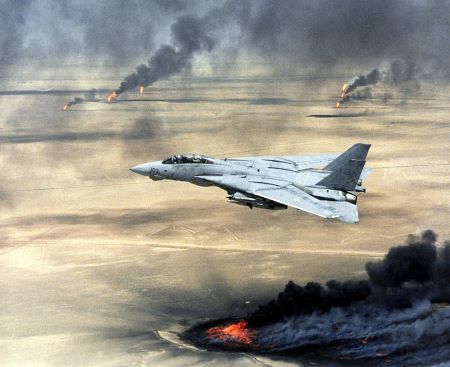
- 1984 - 1988: With the land war becoming a bloody stalemate, both countries instructed their naval forces to begin attacking neutral oil tankers to prevent the other country from profiting off exported oil.
- February 10 - July 4, 1986: Iranian forces finally launched a successful offensive when they captured the Al Faw Peninsula, cutting off Iraq from the sea. In response, Iraq captured the Iranian city of Mehran, hoping to exchange the two regions. However, Iranian forces soon recaptured Mehran.
- 1987: Iran launched several offensives to capture Basra. These attacks ultimately fail. By the end of 1987, Iran no longer had the resources to launch any more major offensives.
- 1987 -1988: Iraq began using chemical weapons on civilian targets in Iran. Chemicals used include mustard gas, sarin, and tabun.
- April 17, 1988: Iraq launched its first major offensive in years, retaking the Al Faw Peninsula and pushing Iranian forces out of Iraq.
- August 20, 1988: After a month of negotiations and sporadic fighting, the UN Resolution 598 went into effect, officially ending the war and reinstating the pre-war borders.
 |
Who Won the Iran-Iraq War?
The United Nations never recognized either country as having won the war, and there is no globally recognized victor. Both sides claimed victory in the war, although neither side had achieved its main goals. Iran succeeded in its primary goal of defending Khuzestan while failing in its secondary goal of ousting the Iraqi Ba'ath party from power, which had become Iran's goal in the last six years of the war. Iraq succeeded in its overarching goal of establishing itself as the most powerful country in the Arab world but failed in its immediate goals of conquering Khuzestan and the Shatt al-Arab river. Regardless, both countries had lost more than they had gained by the war's end.
Iraq came out of the war with a strong military, but it also came out with a devastated economy that was made worse by the high number of destroyed oil refineries. In 1990, Iraq invaded the country on their Southern border, Kuwait, to avoid paying their debt and take over the small nation's oil fields. Initially successful, the invasion quickly backfired when a coalition led by the United States entered the war, quickly defeating Iraqi forces. Saddam Hussein's Iraq never recovered from the resulting sanctions and reparation payments to Kuwait. The ruling Ba'ath party was eventually overthrown during the U.S. invasion of Iraq in 2003, and Saddam Hussein was executed in 2006.
Iran was also economically devastated by the war, and Ayatollah Khomeini died just one year after it ended. In the decade following the war, Iran's government was split between two groups that differed on economic and foreign policies. One group wished to follow a more capitalist economy and normalize relations with the West; the other group pushed for more state control over the economy and a more militant stand against the West. Ultimately, Iran opened up its economy but fluctuated between foreign policies, sometimes funding terrorist attacks against Israel while, at other times, attempting to soothe tensions with the United States and other Western nations.
Iran and Iraq continued to view each other as enemies through the 1990s, though tensions never boiled over into an outright war. After the 2003 U.S. invasion and occupation of Iraq, the two countries developed closer ties, helped by the rise of a common enemy in the terrorist group ISIS.
 |
The Iran-Iraq War began in 1980 with the Iraqi invasion of Iran. Under the rule of Saddam Hussein and the Ba'ath Party, Iraq invaded Iran, which was ruled by Ayatollah Khomeini. Iraq wanted to annex the oil-rich region of Khuzestan and gain full control of the Shatt al-Arab waterway. Iraq also wished to take advantage of the Iranian Revolution of 1979, which overthrew its Western-allied government. Iraq's initial invasion was repulsed and followed by an Iranian invasion of Iraq. The war then turned into a stalemate for several years. Both countries launched airstrikes against major cities in the other country. Toward the end of the war, Iraq began using chemical weapons against civilians in Iranian cities to demoralize the population. In 1988, Iraqi forces pushed Iranian forces out of Iraq, and both sides accepted the UN ceasefire, which returned the two countries to pre-war borders. By the end of the war, hundreds of thousands of soldiers on both sides had been killed, along with over 100,000 civilians.
Video Transcript
The Iran-Iraq War
The Middle East has experienced numerous conflicts throughout history, many of which have shaped the region's political landscape. One of the most volatile, bloody, and recent of these conflicts was the Iran-Iraq War of the 1980s. This war set the stage for many of the current problems in the Middle East, so let's learn a little bit more about it.
Setting the Stage
Dating back to ancient and biblical times, the Middle East has a complex history shaped by cultural, political, and economic shifts. The seeds for the Iran-Iraq War were laid years before the first shots were fired. Iran saw major regime changes prior to the war. For several decades, Iran had a pro-Western government. Radical factions within Iran were angered by this, and in 1979, the Iranian Revolution overthrew the government and began the new Islamic Republic.
Iraq had a similar story before the war. In the late 1960s, a coup d'état, or a seizure of power, occurred when the Ba'ath Party took control. The Ba'ath Party was a regional branch of a larger political movement sweeping the Middle East that was socialist in nature and had a strong nationalist appeal. By July 1979, General Saddam Hussein, a leading Ba'athist figure, was the Iraqi president. Thus, in 1979, both Iraq and Iran saw major leadership changes that ultimately opened the door for years of conflict to come between the two countries.
Tensions Build
Tensions between the two countries built rapidly following the Iranian Revolution when the country's new leader, Ayatollah Ruhollah Khomeini, declared that Iraq needed to stage another coup and overthrow the ruling Ba'ath party. This threatened Hussein and the Ba'athists, who saw the new Iranian government as a threat to Iraq. Numerous border disputes intensified these disagreements.
Saddam Hussein had large aspirations as Iraq's leader. He wanted to expand his country's power, prestige, and influence, hoping to become the leading nation in the Middle East. One way of accomplishing many of his goals was to attack Iran, gaining new oil fields, more land and power, and dealing a blow to the threatening regime.
In the months leading up to the outbreak of war, Saddam began strengthening and mobilizing his massive military forces. Iraq had nearly 200,000 soldiers, with thousands of tanks and hundreds of aircraft. Conversely, the Iranian army had just undergone severe officer purges and executions. But Iran still had a strong air force, meaning that any war against them would not be easy. In September 1980, Iraq launched attacks on Iran and the fighting began in earnest.
War Begins
By late September 1980, Iraq began a massive invasion of Iran along the country's southwestern border with Iraq. Because of the mountainous terrain, much of the early attacking was done by air strikes on Iranian air fields. When ground forces went into Iran, they encountered various military and police groups that were all fighting without any overall coordination. Soon, Iran began launching air assaults against Iraq, specifically targeting Baghdad, the Iraqi capital.
The Iranian Navy got involved as well, attacking oil terminals at Basra. Over the coming weeks and months, several major battles were fought, including the fight at Khorramshahr. By November, the Iraqi advance had stalled, and the fighting turned slowly from one of movements to stagnation. At that point, fighting was more in the style of World War One trench warfare, with tanks and defensive tactics being utilized by both sides.
Bloodshed Continues
Over the coming years, this was the pattern of the war. Air strikes, bombings, and trench warfare attacks were used. Iran focused on sending assaults of infantry soldiers to attempt to overwhelm specific parts of the Iraq lines. Iraq soon was pulling back from some of its key conquests in Iran because of massive losses, although Iranian forces were suffering heavily as well. Eventually, Iran launched an offensive into Iraq to force Iraqis out of Iranian soil, and the war intensified even further. By 1984, Iraq had lost an estimated 150,000 soldiers, while Iran had lost twice that many.
This pattern of attacks back and forth by each side continued for several more years. Thousands of civilians were caught up in the struggle and lost their lives during the war. In 1988, Hussein threatened Iran with the use of weapons of mass destruction. Iraq deployed chemical weapons against Kurdish villages within its own borders, resulting in the deaths of thousands of civilians. With such atrocities quickly amounting, the Iranian leader, Ayatollah Khomeini, chose to accept a UN ceasefire agreement. The war soon came to an end.
Consequences of the War
So, what was the result of these eight years of war? Estimates of the casualties on each side are not firm and are at best just guesses. Iraq lost anywhere from 100,000 to 200,000 killed, with over 400,000 wounded and 70,000 taken prisoner. Iran likely lost over 200,000 killed, many of whom were civilians killed by Iraqi bombs and chemical weapons.
Representatives from each country convened to discuss peace terms in Geneva, but the discussions did not go well. Iraq refused to withdraw from Iran until the Iranians acknowledged Iraq's holding of the Shatt al-Arab waterway, one of the key disputes that had led to war in the first place. The fighting was over, but the disputes continued. Thousands of prisoners of war would be held for years to come.
Lesson Summary
The Iran-Iraq War was a long and bloody struggle from 1980 to 1988 that cost hundreds of thousands of lives. It occurred as a result of major political changes in the region. Each side used tanks, air power, and ground assaults to batter the other, with neither ultimately achieving its full goals for the conflict.
Many today believe that the war was a stalemate, as neither side could claim a full victory. Ultimately, the Iraq-Iran War cost the lives of hundreds of thousands and left the Middle East as an even more volatile region than ever before. Iraq and Iran would continue on their paths towards further instability, and the region would see much more conflict in the years to come.
Learning Outcomes
After you have finished with this lesson, you should be able to:
- Summarize the causes and history of the Iran-Iraq War
- Recall the timeline of the war and the type of fighting that ensued over the years
- Explain the outcomes and consequences of the Iran-Iraq War
Register to view this lesson
Are you a student or a teacher?
Unlock Your Education
See for yourself why 30 million people use Study.com
Become a Study.com member and start learning now.
Become a MemberAlready a member? Log In
BackResources created by teachers for teachers
Over 30,000 video lessons
& teaching resources‐all
in one place.


I would definitely recommend Study.com to my colleagues. It’s like a teacher waved a magic wand and did the work for me. I feel like it’s a lifeline.
Jennifer B.
Teacher

Back

Iran-Iraq War | Summary, Causes & Timeline Related Study Materials
Explore our library of over 88,000 lessons
Browse by subject