Copyright
Social Science Courses / Course

Bashkir People | History, Culture & Language

Instructor Daniela English

Dani is a PhD student, and has taught college English & tutored in multiple subjects for over three years. They have an MA in English Composition & Pedagogy and a BA in Women's Studies, Religious Studies, & Sociology, both from the University of Massachusetts Boston. They also have received awards for their academic research and teaching. Habla español & Gaeilge acu.

Find out who the Bashkir people are and understand their history. Discover the important features of the Bashkir language and see the culture of the Bashkirs.

Bashkortostan (in the southeastern portion of Russia, southeast of Moscow) is the homeland of the Bashkir people. It is currently the Republic of Bashkortostan in Russia.

A red and tan map of Russia with places labeled in different colors. Bashkortostan is in red; southeastern Russia.

The Bashkir people were nomadic people in the region known as the Urals, after the Ural Mountains that dominate the region. They were first mentioned as an ethnic group by the Greek scholar Herodotus in the 5th century BCE. Their territory, historically, spanned across the regions of present-day Kazakhstan, the Chelyabinsk Oblast in Russia, the Russian steppes, and the present-day Republic of Tatarstan in Russia.

From the 13th to the 15th century, the Bashkir people were under the rule of the Mongols. But, beginning in the 1500s, the Bashkir people found themselves part of the Moscow State (which later became Russia). In 1574, the Russians constructed the city of Ufa in the Bashkortostan region. Today, Bashkortostan (Башҡортостан) is officially titled the Republic of Bashkortostan.

Two people in traditional Bashkir dress c. 1872.

2 people in traditional dress. Woman (left) is in red, long dress. Man (right) is in long blue robe.

The national symbols of the Bashkir people provide insight into their culture. The first of these symbols of note is the kurai, an end-blown wind instrument akin to a flute but with only seven holes. There is even a kurai flower named after this instrument that serves as a national symbol as well.

Bashkir tradition holds that the stylized form of the kurai flower has seven petals to signify the seven Bashkir clans that united when they formed an agreement to join Russia centuries ago. The kurai flower is on the national emblem of the Bashkir people and the flag of the Republic of Bashkortostan.

Regarding religion, the Bashkir people have long been predominantly practitioners of Sunni Islam, though some Bashkir people practice Eastern Orthodox Christianity. Like many cultures around the world, ancient beliefs are akin to shamanism (magical and spiritual healing) and animism (belief in spirits within nature). These are reflected in their national epics and elements of their culture.

The Bashkir language is often referred to as Bashkort in English texts, though it is known in Bashkort as Başqort tele (Башҡорт теле‎) or Başqortsa (Башҡортса‎). It is part of the western branch of the Turkic language group (which is, itself, part of the proposed larger Altaic language group). Specifically, it is in the Uralian subgroup alongside languages like Chulym and Tatar, also spoken in the Russian Federation.

There are two dominant dialects of Bashkort: the Yurmatin, or Steppe, dialect in the southern regions and the Kuvakan, or Mountain, dialect in the northern regions. There is also a western dialect called Burzhan. In total, the speakers of the Bashkort language total 1,180,940, with the majority (1.09 million) of these speakers in Russia. Russian Bashkir people also tend to speak Russian as a primary or secondary language; the Bashkort language is often perceived today as a language of the older generations.

The Bashkir people, or Başqorttar (Bashkort: Башҡорттар), are a minority ethnic group native to Russia and some of the countries bordering Russia. There are about 2 million Bashkir people today, with most of them located in Russia. Historically, their homeland included regions such as present-day Kazakhstan, the Chelyabinsk Oblast in Russia, the Russian steppes, and the present-day Republic of Tatarstan in Russia. Today, many Bashkir people live in the Russian Republic of Bashkortostan (Башҡортостан). The flag for the Republic of Bashkortostan uses the symbol of the kurai flower, named after their national flute-like instrument, with seven petals to indicate the seven Bashkir clans that united when they joined Russia.

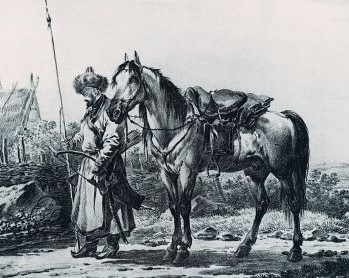
In addition to Russian, some Bashkir people speak the Bashkir language called Bashkort, natively known as Başqort tele (Башҡорт теле‎) or Başqortsa (Башҡортса‎), which is written using an extended form of the Cyrillic script. Other important cultural elements include their reputation for work with horses, their wild-bee keeping, and their use of Turkish and Mongolian styled yurts, which are large, round, temporary housing often used by nomadic peoples in that region. They also have two national epics called the Ural-batyr, which modern scholars often connect to Zoroastrianism, the first monotheistic religion in the world, and its sequel, the Akbuzat. Both have been recorded in several forms for centuries.

Frequently Asked Questions

What is the religion of the Bashkir people?

The Bashkir people are predominantly Muslim, specifically practicing Sunni Islam. Some others also practice Eastern Orthodox Christianity, which is more popular in Russia.

What does Bashkir mean?

"Bashkir" is a name for the Bashkir people, an indigenous group in Russia. They are of Kipchak Turkic background. It is also used to describe the music, language, and other cultural elements of the Bashkir people.

Register to view this lesson

Are you a student or a teacher?

Unlock Your Education

See for yourself why 30 million people use Study.com

Become a Study.com member and start learning now.

Become a Member  Back

Resources created by teachers for teachers

Over 30,000 video lessons & teaching resources‐all in one place.
Video lessons
Quizzes & Worksheets
Classroom Integration
Lesson Plans

I would definitely recommend Study.com to my colleagues. It’s like a teacher waved a magic wand and did the work for me. I feel like it’s a lifeline.

Jennifer B.
Teacher
Jennifer B.
Create an account to start this course today
Used by over 30 million students worldwide
Create an account