
Nihilism vs. Existentialism | Definition, Differences & Examples
Do existentialists believe in God?
Existentialists can believe in God or any religion. Existentialism is compatible with religious beliefs because it does not entirely reject all moral systems like nihilism. Religious existentialists use their existential perspective to examine the importance of religious doctrine to determine their own moral code.
How does existentialism differ from nihilism?
Existentialism differs from nihilism because individuals can create meaning in their lives, which is impossible under nihilism. Both meaning and morality can be constructed in existentialism, primarily in conjunction with the acceptance of existential anxiety and the use of free will.
Is existentialism the same as nihilism?
No, existentialism and nihilism refer to different philosophies. Both operate on the presumption that life is meaningless and ideas of "good" and "bad" are based on human constructions. They diverge at this point, however, wherein nihilists reject all knowledge as unreal or impossible to communicate, and existentialists aim to create meaning through free will.
What is the opposite of an existentialist?
In many ways, the opposite of an existentialist is a nihilist. An existentialist believes in free will, morality, and the validity of (some) knowledge, which are the primary factors that differentiate their beliefs from a nihilist. A nihilist rejects all these components as untrue.

Recommended lessons and courses for you









Nihilism is a broad philosophy that describes a belief that there is nothing certain in human existence and all values are relative. Nihilism is the rejection of fundamental truths often used to describe or govern human life, such as the rejection of morals, assumptions, or knowledge. These values are ultimately rejected because, in nihilistic philosophy, nothing can truly be known; therefore, establishing value systems is futile because they will reflect only arbitrary beliefs that cannot be proven right or wrong. Life for a nihilist is inherently meaningless because there are no absolute truths to explain why we exist or how to exist correctly. In other words, nihilistic perspectives conceptualize the world as a chaotic, varied place wherein everyone is randomly placed for no reason. The word nihilism comes from the Latin word "nihil" which means "nothing" because a true nihilist believes that nothing can be proven true.
A nihilistic perspective incorporates elements of pessimism, moral skepticism, and solipsism. Pessimism refers to the belief that everything is negative and presumes that nothing good can, or will, happen. Nihilism incorporates pessimism because it presumes that nothing good can happen because nothing good can truly exist -- goodness is a construct that is different for everyone. Moral skepticism is the philosophical questioning of moral systems, which is a key component in nihilism. For nihilists, moral skepticism is a given because there can be no way to categorize actions and beliefs as morally correct (or incorrect), so all values and value systems are rejected. Solipsism refers to the philosophical understanding that the only thing that can be known with certainty is the existence of the self (or the mental construction of the self). For a nihilist, this is true: The only thing of which a nihilist can be certain is that their individual existence is real, though it is meaningless. Though these components are the tenets of nihilism, different nihilistic perspectives negotiate these elements differently.
The idea that life is meaningless is ancient, though the label nihilism is relatively new. German philosopher Friedrich Jacobi (1743-1819) created the term nihilism when he used it to critique Immanuel Kant's (1724-1804) transcendental idealism (the belief that perception of the world is reliant on the mind, and therefore the physical world is inextricably linked to the self). One of the earliest philosophers who articulated nihilistic ideals was Parmenides of Elea, a Greek philosopher who lived during the early and mid-fifth century BCE. He posited that life is simultaneously necessary and arbitrary based on one's perceptions of the world around them. Similar ideas were stated by the Buddha (563-483 BCE) and the Buddhist ideal of nirvana-- the state of nothingness achievable after the transcendence of human existence and perception. Nihilism gained popularity as its philosophy in the 19th century, partially in response to the rapidly modernizing world during the Industrial Revolution.
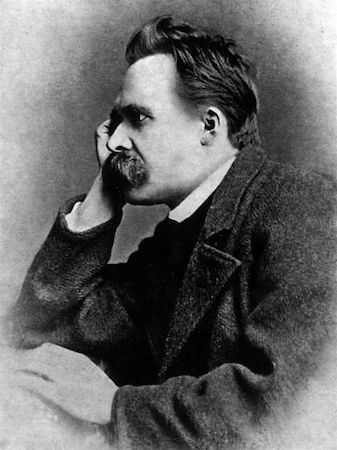
Perhaps the most famous nihilist philosopher is Friedrich Nietzsche (1844-1900). Nietzsche was a German philosopher and author who criticized many aspects of traditional European life and culture, especially concerning Christian religious traditions. Nietzsche believed that the only systems that govern human life are those invented and followed by the individual. Because there are no objectively right or wrong beliefs or actions for Nietzsche, any moral code (such as those created in Christianity) is a false construct. According to Nietzsche, nihilism progressively disproves all values, eventually leading to the destruction of societies. A nihilistic outlook becomes pervasive because the rejection of some truths leads to the rejection of all truths. For example, a nihilist who rejects the existence of Christian God (like Nietzsche) would eventually also reject their most basic morals as they begin to conceptualize the world and human life as progressively more meaningless.
 |
Types of Nihilism
There are many types of nihilism. The broadest type is existential nihilism: The belief that life has no inherent purpose. Many types of nihilism incorporate this view. Metaphysical nihilism refers to the belief that physical objects might not exist. In other words, this type of nihilism questions whether our physical world and reality can be proven as real, or if they are simply perceptions within the mind. An extreme metaphysical nihilist believes that we can never know with certainty that anything we see or touch is real, which relies on the solipsist presumption that the self is real. Similarly, moral nihilism (or ethical nihilism) posits that actions and beliefs cannot be moral or immoral because no ethical basis can ever be established to gauge human activity. Political nihilism is the rejection of the validity of political institutions (whether real or imagined) based on the rejection of the values these institutions claim to uphold. Positive nihilism (sometimes called optimistic nihilism) involves taking a positive perspective to a nihilistic worldview. For example, a positive nihilist might feel freed by knowing that there is no purpose in life because this means that they can pursue their interests unencumbered by pressure to become a certain type of person.
There are also two types of nihilism that describe nihilists in terms of their actions: active and passive nihilism. Active nihilism is the belief that after the acceptance of nihilism (or rejection of meaning and values in life), it is possible to surpass its entropic nature. As Nietzsche suggested, many nihilists can spiral into a pessimistic and skeptical outlook that destroys all their loyalties and beliefs. An active nihilist, therefore, would use the destruction of their values as a starting point to establishing a new set of values, even if these values maintain the nihilistic perspective that they are not necessarily good or bad. In other words, an active nihilist aims to surpass the limitations of extreme pessimism and the dismantling of personal worldviews. A passive nihilist believes the opposite and allows nihilism to take over their perception of the world. A passive nihilistic perspective does not seek to surpass nihilism, as it assumes that entropy is the natural course for all things real or imagined.
Nihilism Examples
Nihilism can take many forms when practiced and does not describe any one type of belief, action, or thought. Some thoughts that are characteristic of nihilism involve asking the questions: How can we know anything if there is no meaning in life? And, how can we live a good life if there is no moral basis for human action? Generally, these questions would garner answers that there is no meaning, we cannot know anything with certainty, and there is no way to live a good life because judgments of good and bad are arbitrarily established human constructs. Answers like this highlight the moral skeptic and pessimistic nature of nihilism.
One main component of nihilistic thought, especially according to Nietzsche, is the progressive deconstruction of value systems. When one value system is analyzed and rejected in nihilist theory, this leads to the same outcome for all consecutive value systems. This is a primary component of Nietzsche's arguments about nihilism, and he warns against allowing passive nihilistic thoughts to become so pervasive that no action is taken to correct any perceived wrongdoings. Because nihilistic ideals reject all fundamental truths, passivism can be a natural nihilistic action. When faced with the vast deconstruction of all beliefs and values, an individual can be left asking "Why bother trying to change things when nothing in life matters?" While there is no one answer to this question within the nihilistic ideology, Nietzsche warned against allowing questions like this to prevent any efforts toward change (whether this change is personal, communal, or otherwise).
Opposite of Nihilism
There is no exact opposite of nihilism, but existentialism is often positioned as an approximate opposite. It is difficult to characterize philosophies as opposites because they usually refer to a broad set of beliefs. Existentialism as a postmodernist philosophy is, however, in many ways oppositional to nihilism. The two ideas share the presumption that life is meaningless, but they negotiate this stance in opposite manners. A nihilist believes that life is meaningless and the only known truth is the existence of the self. An existentialist believes that life is meaningless too, but that meaning can be created by the individual. Existentialism operates on the assumption that humans have free will, which nihilism rejects because it rejects all fundamental qualities a human might possess. If we have free will, existentialists argue that we can create meaning in our meaningless lives by establishing our values and acting in accordance with them. Only the individual can determine how to give meaning to their life. This is in opposition to nihilism because nihilism rejects both free will and the acceptance that meaning can be created. Modern philosophers often espouse beliefs from both philosophies or suggest another that encompasses both, such as Albert Camus (1913-1960) who posited a related philosophy called absurdism. Absurdism is the belief that life is meaningless, and there is a natural tension within the individual between their perception of the futility of life as meaningless and their desire to create their own meaning.
Existentialism is a broad term that generally refers to the practice of philosophically questioning the nature of human existence. As a school of thought, it refers to the idea that life is meaningless and everyone must either reject or accept this truth and negotiate their space in a chaotic world accordingly. An existentialist believes that life is meaningless because they presume that there is no inherent reason for human existence. If there is no greater purpose for humans, then everyone must use their free will to establish a purpose for themselves. This rejects the governance of larger value and belief systems, though not necessarily to the extent to which nihilists reject these systems. Generally, existentialist thinkers believe in several key tenets:
- Solipsism and acceptance of human existence: people and their mentally constructed selves exist
- Life is absurd, irrational, and meaningless: human existence is not anchored in a prescribed purpose and is instead considered chaotic
- Free will and authenticity are important: each of us possesses free will and the ability to represent our 'true' or authentic self as we perceive ourselves from within
- Life is social and happens in context: though we have free will, people cannot just act without repercussion or thought (or if you do, there can be consequences) because we live amongst others
- Anxiety as a condition in life: the individual is aware of all these conflicting situations and the futility of life, and thus feels some anxiety upon the realization of the vastness and entropy of the universe
These are generalized beliefs that characterize many existentialist philosophies, but this list is not exhaustive. Further, most scholars define nuance within these beliefs rather than apply them without question.
Types of Existentialism
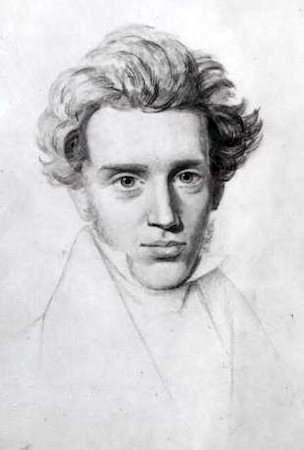
Because existentialism refers to such a broad array of philosophical ideologies, the types of existentialism are often defined concerning individual scholars in the field. One of the first existentialists is Søren Kierkegaard (1813-1855), who was a Danish philosopher credited with establishing many of the main existentialist beliefs listed above. He critiqued the role of Christianity and the church in Europe by claiming that state-controlled religious governance was unsustainable. He placed great emphasis on the individual and garnering a sense of authenticity, especially in the context of living in a society amongst others who have expectations for behavior. Another type of existentialism is that associated with Jean-Paul Sartre (1905-1980), a French philosopher and author. His existentialist perspective emphasizes achieving an authentic existence through the embracing of existential anxiety and obtaining freedom. Freedom, according to Sartre, is achievable through the rejection of conformity (especially conformity to institutions). His emphasis on existential anxiety illustrates that as individuals living in the world, we are simultaneously permitted to be free and condemned by this same freedom. Freedom, he argues, is a gift and a curse, which illustrates the existential tendency to accept multiple truths at once.
Sometimes an existentialist perspective is applied to other belief systems, especially religious beliefs, which establishes another type of existentialism. These two ideologies can be mixed because religion is in many ways existentialist already, as a primary component of religious beliefs is to explain why humans exist and how to live a good or moral life. Kierkegaard suggested a form of Christian existentialism that emphasizes the maintenance of Christian values without the trappings of large, state-governed church institutions. Existentialism can also be combined with agnostic beliefs (uncertainty about the existence of a higher power) and atheistic beliefs (the rejection of the existence of a higher power or religion). In these types of existentialist practice, the existing beliefs (any religious beliefs, agnosticism, or atheism) are applied through an existentialist perspective. This allows for these types of existentialists to examine the moral codes within their value systems, questioning why something is said to be good or bad. Further, applying an existentialist perspective to other beliefs can allow someone to express themselves and their values more authentically.
 |
Though nihilism and existentialism can be categorized as opposites, this is an incomplete conceptualization of the two philosophies. They share several key similarities:
- Conceptualization that life is meaningless, absurd
- Expectation of anxiety, especially when an individual realizes the futility of their existence
- The same main questions, namely: How can I live a good life when nothing matters?
These similarities are rather vague, which illustrates how two oppositional philosophies can share similar presuppositions. Many of the philosophers associated with nihilism and existentialism practiced both beliefs, including Nietzsche and Kierkegaard. Other philosophers of these ideologies, like Sartre, reject the terms nihilism or existentialism entirely. Even if these presumptions are broad, they are important in positioning these two schools of thought in modern and postmodernist ideas that deconstruct older dichotomous values regarding morality.
There are also several important differences between nihilism and existentialism. These include different conceptualizations of:
- Free will: nihilists reject free will along with all other fundamental truths, but it is a presumption under existentialism
- Morality: under nihilism, morality does not exist; but for existentialists, morality can be constructed based on individual experiences and social context
- Knowledge: nihilists believe that the only known truth is the existence of the self, whereas existentialists have a more varied outlook on what constitutes knowledge and what is (or is not) knowable
- Motivation: a true nihilist would be only motivated intrinsically, whereas most existentialists consider some external motivational factors as well (such as the social context)
These differences are indicative that these two philosophies are still related even if they establish oppositional outcomes. They also illuminate how one might believe components of both, such as Nietzsche who advocated for active nihilism to transcend its pessimism. A natural progression for many who believe that life is meaningless is the acceptance of nihilism, the realization of existential anxiety, then a transition into a blended nihilistic-existentialist outlook.
Nihilism is the belief that life is meaningless, we can never know anything except the existence of the self, and morality does not exist. Life for a nihilist is largely chaotic and is not governed by a higher power, institution, or inherent purpose. People cannot create meaning in their life because meaning itself does not exist. A true nihilist does not believe in any value systems, nor do they attach themselves to other people. Nihilistic ideas are very old, dating back to ancient Greek and Buddhist philosophies, such as the writings of Parmenides of Elea and the Buddhist ideal of nirvana. There are many types of nihilism that employ nuanced perspectives, such as moral nihilists who do not believe that morality exists because there can be no way to judge good or bad. Nihilism often involves taking a solipsist outlook, believing that the only thing that can be truly known is the existence of the self, but they often employ other tactics as well such as moral skepticism and pessimism. Existential, metaphysical, moral, political, and positive are all forms of nihilism that apply the key tenet that life and our constructed interpretations of life are all meaningless at their cores. Active and passive nihilism represent two action outcomes possible when taking a nihilistic perspective: the active approach to continue living life and the passive approach of succumbing to nihilism. Today, many nihilists, including the famous nihilist Friedrich Nietzsche, believe in nihilism and other philosophies simultaneously.
Existentialism is a related philosophy that also conceptualizes life as meaningless. They believe that morality is a construct, and as such, everyone can create meaning in their lives by establishing their values and being authentic to them in their actions. An existentialist presumes free will is a condition of human existence and emphasizes the importance of individuality and self-expression. Existentialism can be applied to other beliefs. For example, a religious moral existentialist believes in the objective morality constructed within their religion while also believing in and practicing existentialist ideals (such as a Christian existentialist who applies Christian beliefs). Though it is in many ways oppositional to nihilism, the two philosophies are not exact opposites and share a few fundamental similarities. Some of the most famous existentialist philosophers, like Søren Kierkegaard and Jean-Paul Sartre were pioneers in establishing their own individual conceptualizations of existentialism.
Video Transcript
Existence Itself
Have you ever questioned something in your life deeply? Maybe you've delved into the existence of God or thought about the concept that maybe we're all just figments of someone's imagination or dream. These are thoughts and questions philosophers deal with on a regular basis; questions that require a great deal of thought and study to understand. However, there are two schools of thought that come close to defining the opposite ends of thought about human existence and will help us to understand the philosophy of being a bit more fully: nihilism and existentialism. These two philosophies go deeply into the most basic of human questions about what we see and experience. Is it all an illusion or can we trust what we see and experience? How do we determine what's real and does it matter? These are some questions explored in the philosophy of being.
Nihilism vs Existentialism
Nihilism became popular during the 19th century and was made more visible through the writings of novelist Ivan Turgenev. Philosophers have promoted this idea in one form or another for millennia with Parmenides of Elea (circa 515 - 450 B.C.E.) documenting nihilism, or the concept of change being impossible because of the non-existence of what is real. Siddhartha Buddha was also well-known for his ideas concerning the illusion of existence or that while things around us might seem real, we are all living in an illusion and must try to escape it or be translated to a higher reality. These ideas filtered down through history to the philosopher Immanuel Kant (1724 - 1804) whose ideas about existence led him to hypothesize that the individual person is at the center of all his or her understanding. This supports the idea of solipsism, or the view that only you exist and what you see and experience are just figments of your imagination. While this view might seem impossible to hold, there are those who do attempt to live as solipsists. As the joke goes, ''We take good care of our solipsist, because when he goes, we all go.''
Existentialism is mostly about human existence and meaning. This philosophy explores many areas including human free will, life choices, struggling against individual nature, fighting for life, irrationality, and personal responsibility. While no belief system, religion, or political system can lay exclusive claim to the philosophy of existentialism, many philosophers of varied backgrounds agree on its basic tenets. For instance, Kierkegaard, a religious philosopher; Nietzsche, an anti-Christian; Sartre, an atheist; and Camus, an atheist all agree that existentialism is about the search for true meaning and believe that human beings never have complete lives because of suffering, poverty, death, and other non-flourishing occurrences. Mostly, however, existentialists believe firmly in free will and individuality and are strongly against imposing one's system of beliefs on others.
Types of Nihilism & Existentialism
The major types of nihilism are metaphysical nihilism, mereological nihilism, partial nihilism, and moral nihilism. Metaphysical nihilism is the hypothesis that nothing exists and that everything is an illusion. This hypothesis is summed up in the children's song ''Row, row, row your boat, gently down the stream. Merrily, merrily, merrily, life is but a dream.'' Mereological nihilism states that objects don't exist, but only atomic and subatomic particles. In this philosophy, what we experience are not object and things, but the ideas we attribute to them. Partial nihilism is the idea that only some objects such as organic objects exist and that all other objects are illusory. Moral nihilism was best characterized by Niccolò Machiavelli who wrote his most famous work, The Prince, which promoted the idea that morals don't exist, but are subjective illusions we construct ourselves.
Existentialism is also divided into subcategories: religious moralist, agnostic relativist, or an amoral atheist. The religious moralist bases existence and one's operation in the world upon fixed, objective ideals such as murder always being wrong. Agnostic relativists don't believe in absolute right and wrong, but see morality as situational or subjective. In other words, under certain circumstances, murder might be justified. The amoral atheist believes that there are no guiding principles for morality and that right and wrong don't exist in and of themselves, but are socially constructed. So in one culture murder might be condemned, but in another culture it might be celebrated, and neither culture is wrong.
Lesson Summary
All right, let's take a moment to review what we've learned. Nihilism and existentialism are entirely different philosophies with very different categories and viewpoints. The nihilist believes in some cases that nothing exists and in others that only some things exist. Regardless, they all must face the existential arguments that insist upon not only existence, but meaningful existence. Whether one is a religious moralist, agnostic relativist, or an amoral atheist, the existentialist believes in finding meaning and making meaning. While both nihilism and existentialism have advantages and disadvantages, they both are very interesting philosophies that will continue to be pursued and discussed for years to come.
Register to view this lesson
Unlock your education
Become a Study.com member and start learning now.
Become a memberAlready a member? Log in
Go backResources created by teachers for teachers
I would definitely recommend Study.com to my colleagues. It’s like a teacher waved a magic wand and did the work for me. I feel like it’s a lifeline.
