Nate Sullivan holds a M.A. in History and a M.Ed. He is an adjunct history professor, middle school history teacher, and freelance writer.
Thomas Jefferson's Contradictory Views on Slavery
Table of Contents
- Jefferson and a Complex Issue
- Did Jefferson Own Enslaved People?
- Jefferson's View on Slavery
- Slavery and the Legacy of Jefferson
- Lesson Summary
''We hold these truths to be self-evident, that all men are created equal...''
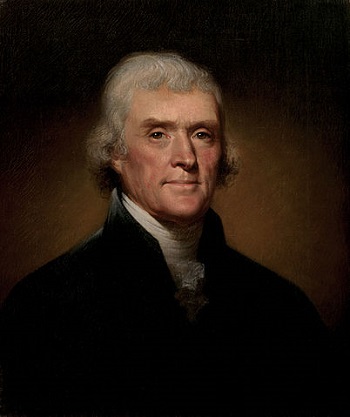
These words, taken from the Declaration of Independence, have served to inspire millions of people. The core theme is the idea that all human beings deserve equality. And yet... how could the man who wrote these words use enslaved people himself? Thomas Jefferson's contradictory approach towards slavery has been the subject of intense scrutiny and debate among historians. In this lesson, we will explore this issue and attempt to provide some degree of resolution.
We will only be scratching the surface here. Entire books have been written on the subject, and given the highly controversial nature of this issue, there are a host of views and interpretations. Nevertheless, let's wade forward into the murky waters of Jefferson's views on slavery and see if we can't bring about some clarity.
Thomas Jefferson did indeed use the labor of enslaved people. Over the course of his lifetime, some 600 African Americans worked in slavery for his benefit at his plantation home Monticello in Charlottesville, Virginia. The labor of enslaved people was used in a variety of capacities, including the planting and harvesting of crops, construction, maintenance, manufacturing, house-keeping, and other areas. It is believed that these people were treated comparatively better by Jefferson than the brutal conditions that were common to slavery in that period.
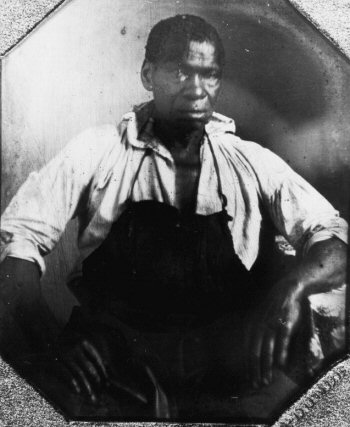
Sally Hemings, who was of mixed African and European descent, has become one of the most well-known people to have been enslaved by Jefferson. Many believe Jefferson had a long-term sexual relationship with her. Granger Jefferson, a blacksmith whose photo is still in existence, also labored for Jefferson in slavery.
![]() |
Jefferson's writings seem to support the notion that he was opposed to slavery. Jefferson called slavery a moral depravity and believed the institution ran contrary to the laws of nature, and of nature's God. In fact, he desired to see slavery abolished.
For example, in 1778, Jefferson introduced legislation that prohibited the importation of enslaved Africans to Virginia. A few years later he proposed legislation that would ban slavery in the Northwest territories, but this legislation failed to pass Congress by a single vote.
If you were to go through Jefferson's writings, you would find example after example in which he clearly identified slavery as a social evil that needed to be put to an end. In fact, he believed the institution of slavery threatened the very survival of the nation (which, as we know from the events of the 1860s, was not too far from reality)!
But Jefferson also held racist ideas. He believed African Americans were inferior to those of European descent, as this was the commonly held view of his time.
So how was all of this resolved in Jefferson's mind? If you pay attention to one thing in this lesson, pay attention to this statement: basically, Jefferson favored a gradual emancipation, meaning he believed slavery should be abolished in stages. He believed it would be dangerous to suddenly free all enslaved people at once. He feared racial conflict would erupt. He feared such a radical change would result in harm both to enslaved people and to white citizens. As a champion of democracy, and the will of the people, he also believed the abolition of slavery should be initiated by the masses, not forced on the masses by a federal government.
Jefferson also hoped that people who labored in slavery in America, once emancipated, would be deported to either Africa or the West Indies. This was a common view of the time that stemmed not so much from dislike as from the belief that an interracial society would not be in the best interest of the people liberated from slavery. Basically Jefferson (and others) believed a new start in a new land was in the best interest of those emancipated.
Jefferson handed off the issue of slavery to future generations, believing they should decide what to do about it. To come up with a radical plan for the abolition of slavery was too great a risk for Jefferson to take. Many historians have criticized Jefferson for not taking a firmer stance. They regard Jefferson as lacking courage, which is a valid argument. Jefferson held to lofty ideals of liberty and equality, but in practice, these ideals did not always play out.
So what are we to make of Jefferson? To what extent do his contradictory views on slavery diminish his legacy? Different historians have different ideas. To some, he is a coward; to others, he was wise not to push for something too radical too soon.
Jefferson, however, will most-likely always be regarded highly for writing the Declaration of Independence and for being a leading 'Founding Father.' He was definitely a brilliant thinker, even a great man; albeit, in his personal life, a man of flaws. It is these contradictions that add to the mystery of who Jefferson was. We can't put him in a box. He was a complex figure.
![]() |
Let's review. At his plantation home of Monticello in Charlottesville, Virginia, Jefferson made use of the labor of some 600 African Americans over the course of his lifetime. Sally Hemings was among the most well-known.
Jefferson regarded slavery as an evil but favored a gradual emancipation, in which enslaved people would be freed in stages, rather than all at once. He believed an instant emancipation presented numerous threats. Jefferson believed that following emancipation, the formerly enslaved people should be deported and begin a new life in a new land. He was not convinced the two races could function side by side.
In the end, Jefferson handed off the issue of slavery to be decided by future generations. For this, he has been criticized by some historians. Jefferson remains a complex man: a man who held brilliant ideals but whose practices differed from what he wrote.
Register to view this lesson
Unlock Your Education
Become a Study.com member and start learning now.
Become a MemberAlready a member? Log In
BackResources created by teachers for teachers
I would definitely recommend Study.com to my colleagues. It’s like a teacher waved a magic wand and did the work for me. I feel like it’s a lifeline.