Copyright
Math Courses / Course

Applications of Systems of Equations

Lesson Transcript
Instructor
Laura Pennington

Laura received her Master's degree in Pure Mathematics from Michigan State University, and her Bachelor's degree in Mathematics from Grand Valley State University. She has 20 years of experience teaching collegiate mathematics at various institutions.

Expert Contributor
Christianlly Cena

Christianlly has taught college Physics, Natural science, Earth science, and facilitated laboratory courses. He has a master's degree in Physics and is currently pursuing his doctorate degree.

Systems of equations are extremely useful in applications where there is more than one unknown. We'll explore applications that involve systems of equations and look at how to set up a system of equations with given information.

A system of equations is a group of two or more equations containing the same variables. In a system of equations, there is more than one unknown since the equations contain more than one variable. We can use these systems to solve for all of the variables, or unknown quantities, in the system. You can see some examples appearing here:


examples of variables


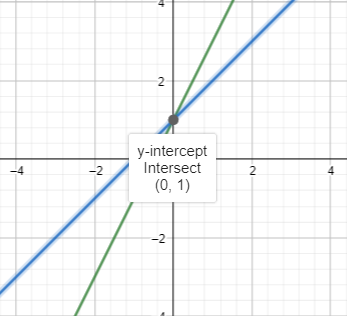
Since a system of equations is a set of equations, we can also represent the system graphically by graphing all of the equations in the system on the same graph. For example, consider the following system.

  • 3x - y = 1
  • 4x + 2y = 8

The image shows this system represented graphically.


An error occurred trying to load this video.

Try refreshing the page, or contact customer support.

Your next lesson will play in 10 seconds
  • 0:04 System of Equations
  • 1:32 System of Equations…
  • 3:44 Example
  • 5:30 Lesson Summary

Let's suppose you want to know the win/loss record of your school's basketball team. You know they played 24 games during the season, and you also know that they won four more games than they lost. We're looking for the number of wins and the number of losses, so we have two unknowns. Hmmm, more than one unknown, that should ring a bell!

Systems of equations are used to solve applications when there is more than one unknown and there's enough information to set up equations in those unknowns. In general, if there are n unknowns, we need enough information to set up n equations in those unknowns. When we have those two things, setting up a system of equations is a good way to begin to tackle the problem.

Finding your team's win/loss record involves finding more than one unknown, and we are given information to set up equations in those unknowns, so let's go ahead and set up a system of equations to represent this problem.

Let's consider one more example. Suppose you want to find three numbers given the following information:

  • If you add all the numbers together you get 50.
  • 2 * the first number + the second number = the third number + 22.
  • Doubling the sum of the first and second number gives 3 * the third number.

We see there are three unknowns, so we need three equations. We start by naming the unknowns with variables. Let x = the first number, y = the second number, and z = the third number. If we add all the numbers together, we get 50. Therefore, x + y + z = 50. We have one equation.

All right, let's now take a moment or two to review. As we learned, a system of equations is a group of two or more equations with the same variables. A solution of a system of equations consists of the values of the variables, or unknown quantities, that make all of the equations in the system true. This is also the intersection point of the equations when we graph them all on the same graph. This is, as we also learned, a point that satisfies both of the equations in the system, known as the solution.

Systems of equations can be used in applications that have more than one unknown and enough information to set up equations in those unknowns. Remember that if there are n unknowns, we need enough information to set up n equations. Recognizing when to use systems of equations and being familiar with how to set them up makes solving applications with more than one unknown much easier.

Additional Activities

Systems of Equations: Multiple Choice Exercise

This activity will help you assess your knowledge regarding systems of equations and their applications.

Directions

For this activity, carefully read and select the best answer for each of the given questions. To do this, print or copy this page on a blank paper and circle the letter of your answer.

Multiple Choice


1.) Which of the following statements is TRUE about the two equations x + 3y = 4 and y - 4x = 23?

A. Each equation signifies lines that are parallel with each other.

B. The given are classified as systems of equations.

C. The solutions for x and y are -3 and 5 respectively.

D. Both B and C


2.) Suppose you have a system of four equations with four unknowns. Which of the following statements regarding these equations is FALSE?

A. Any intersection in the graphical representation of the equations is a solution.

B. All unknown variables can be calculated using four equations.

C. The system of four equations can be reduced to three.

D. Not enough information.


3.) What is the solution for the following group of equations?

y-2x=2

x-4y-z=8

4x+6y+3z=-6

A. x = -6, y = -10, z = 26

B. x = 3, y = -5, z = 26

C. x = -2, y = -10, z = -26

D. x = 3, y = 10, z = 26


4.) Which of the following correctly shows the graph and solution of the given equations?

6x-3y=-3

x-y=-2

A.

B.

C.

D.


5.) If the solution to a system of equations is x = 2, y = -12, and z = 6, then the ordered solution would be __________.

A. (1, 3, -6)

B. (2, -12, 6)

C. (-12, 6, 2)

D. Both A and B


Answer Key

1.) B

2.) C

3.) A

4.) D

5.) B

Register to view this lesson

Are you a student or a teacher?

Unlock Your Education

See for yourself why 30 million people use Study.com

Become a Study.com member and start learning now.

Become a Member  Back

Resources created by teachers for teachers

Over 30,000 video lessons & teaching resources‐all in one place.
Video lessons
Quizzes & Worksheets
Classroom Integration
Lesson Plans

I would definitely recommend Study.com to my colleagues. It’s like a teacher waved a magic wand and did the work for me. I feel like it’s a lifeline.

Jennifer B.
Teacher
Jennifer B.
Create an account to start this course today
Used by over 30 million students worldwide
Create an account