Nora has a Master's degree in teaching, and has taught a variety of elementary grades.
Mobius Strip Activities
Table of Contents
- What Is a Mobius Strip?
- How to Make a Mobius Strip
- Cut Up Your Mobius Strip
- Mobius Strip in Art
- Mobius Strip Square
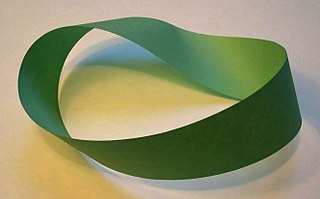
Albert Mobius, a 19th century astronomer, developed the Mobius strip as a representation of a mathematical puzzle. The Mobius strip is a rectangular strip that has been joined at each end after one end is twisted 180 degrees. The end result is a loop that looks like it's two-sided, but actually only has one side.
The following activities will allow your students to make their own Mobius strip and learn more about this one-sided nonorientable surface. As your students work, be sure to help them make connections between this curious optical illusion and other concepts in math and physics.
Give your students the following directions to make their own Mobius strips:
- Use paper to create a thin rectangular strip (imagine that you are making a paper bracelet for your wrist to get the shape right)
- Turn one end 180 degrees
- Tape the two ends together
![]() |
After your students have made their strips, ask them to choose a starting point and draw a continuous line until they reach their starting point again. Help your students notice that they were able to draw on just one side of the strip even though it is twisted.
Ask your students:
- How is it that the Mobius strip looks like it's twisted but has one continuous side?
- Is there a way you could alter your Mobius strip to have two sides?
This activity is intended to be done after your students have created their first Mobius strip. Pass out scissors and ask your students to cut along the line they drew in the previous activity. Ask your students the following discussion questions:
- What happened to your Mobius strip when you cut it in half?
- Do you think there's any way you could cut your Mobius strip and have the two pieces separate?
Listen to your students theories about how they might cut the strip so that the loops would separate. Encourage your students to test out their theories. You should include additional paper and tape for your students to keep creating and testing their Mobius strips. Encourage your students to notice patterns in their Mobius strip exploration.
Pass out photographs of the following art:
- Mobius Strip by Robert R. Wilson
- Endless Ribbon by Max Bill
- Parade of Ants by M.C. Escher
In small groups, have your students examine the artwork and identify the places where they see Mobius strips. Have your students discuss why they think each artist chose to use Mobius strips in their art. Pass out a Venn diagram and have your students compare and contrast the different ways that the artists use Mobius strips.
After your students have examined the artwork, they should create their own piece of art that incorporates a Mobius strip. You can encourage your students to either paint or create a sculpture with air-dry clay. Display your students' work in a class art gallery. You might consider inviting students from other classes to come see your students' work.
Using the directions in the activity How to Make a Mobius Strip, have your students make a strip. Then have your students make a loop without the 180 degree turn. Tape the loops side-by-side and cut down the center of each strip. When your students unfold the paper, they will have a square. Ask your students the following questions:
- What happened to the loops to turn them into a square?
- Could you reverse what happened to put them back into two loops?
- Do you think there is a way to make another shape?
You might extend this by giving your students time to create their own new shapes by taping together regular loops and Mobius strips. You should ask each of your students how they connected the loops then cut them to create new shapes.
Register to view this lesson
Unlock Your Education
Become a Study.com member and start learning now.
Become a MemberAlready a member? Log In
BackResources created by teachers for teachers
I would definitely recommend Study.com to my colleagues. It’s like a teacher waved a magic wand and did the work for me. I feel like it’s a lifeline.