
What is the Literary Canon? | Canonical Texts in Literature
What books are part of the literary canon?
The western literary canon is in a constant state of adaptation and change, especially due to the broader debate during the 20th and early part of the 21st centuries. However, as it currently stands, commonly accepted "canonical" works and writers include:
The Epic of Gilgamesh, The Bible, Homer, Sappho, Sophocles, Plato, Aristotle, Augustine, Beowulf, Dante Alighieri, Chaucer, Francis Petrarch, Miguel de Cervantes, William Shakespeare, Jean-Jacques Rousseau, Frederick Douglass, William Wordsworth, Emily Dickinson, James Joyce, Franz Kafka, Virginia Woolf, T.S. Eliot, William Faulkner, Pablo Neruda, Albert Camus, John Steinbeck, Gabriel Garcia Marquez, and Chinua Achebe, among many others.
Why is literary canon important?
The literary canon serves as an important standard for determining the quality and long-term value of any given work. Even texts and writers who are not specifically considered canonical are measured against the broader canon for determining their literary value.
What makes an author part of the literary canon?
Though broadly debated, a "canonical author" is a writer whose work is stylistically excellent, is highly reflective of the tenor or controversies of their time period, and has demonstrable long-term influence across society.

Recommended lessons and courses for you












The term literary canon is a technical term used to describe a set of texts that serve as a recognized standard of stylistic quality, cultural or social significance, and intellectual value. The origin of literary canon is not determined so much by a specific date; rather it has been adopted over time by pervasive usage in university and graduate classrooms, references and citations in academic journals, and it is to a degree, also based on the influence of curriculum publishers and testing organizations.
Because people in a society are most likely to be exposed to the accepted canon of literature, these texts also inform both a generally accepted worldview and determine the ''imaginative boundaries'' of how that society tends to think. An example of its use in literature is with Aristotle's works, which have been considered part of the literary canon for the last several centuries. Western societies have tended to approach questions of warfare and economics, for instance, through an Aristotelian lens. Essentially, the voice a society hears most often is most likely to carry an outside influence on the people within that society, both in how they think and how they live.
How is the Literary Canon Determined?
The fact that the literary canon is determined through usage and collaboration makes it significant in literature because it is both highly adaptable and controversial at the same time. In recent years, a push to change what authors and works should be considered canon or canonical has driven a great deal of debate within the Western literary world. As such, literary canon is also commonly referred to as Western canon. Factors that may contribute to a work being included in the literary canon take into consideration its cultural significance, historical impact, and scholarly consensus. The process through which a work becomes part of the canon evaluates the critical acclaim, influence, and longevity of the literary work.
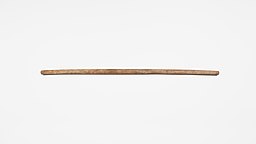 |
The definition and meaning of canon in English stems from an older, Greek term (transliterated as kanon) which referred to a ''standard'' or a ''measuring rod'' against which something was compared to ensure that it was set correctly. The physical, engineering use of this term eventually took on a metaphoric meaning. Now, the term canon is defined as an agreed-upon standard against which other, most frequently intellectual, works are measured for quality, long-term value, and influence. Within this context, a "canonical text" sets the standards as a representative work of its genre or time, and that canonical status can influence the interpretation and study of all other works within that genre.
What Does Canon Mean in Western Society?
Though different in Eastern cultures, Europe and much of Western society have worked within the boundaries of a fairly consistent literary canon for the last 1,000–1,500 years. In general, the Western canon has prioritized the voices of the dominant Greco-Roman philosophers, the poets and novelists of France and Britain, and, in more recent centuries, the sociological/philosophical voices of Germany. It is equally true that American novelists, in particular, have found their way into the generally accepted canon during the late 19th and throughout the 20th centuries.
There are numerous examples of canonical texts in Western literature. Canonical voices are generally considered to be some of the most influential in shaping Western culture's beliefs and assumptions surrounding justice, the meaning of human life, beauty, virtue, and other societal values. The following few examples of canonical texts from various periods and genres to illustrate the breadth of the literary canon for the more influential and widely accepted voices of the Western literary canon include:
 |
- Epic of Gilgamesh
- Homer
- Aristotle
- William Shakespeare
- Frederick Douglass
- Emily Dickinson
- Virginia Woolf
- T.S. Eliot
- William Faulkner
- Pablo Neruda
- Albert Camus
- John Steinbeck
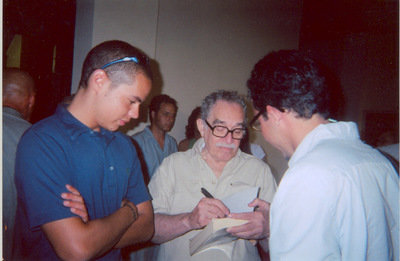
- Gabriel Garcia Marquez
- Ray Bradbury
- Chinua Achebe
Literary canon is important because of its role in shaping cultural and societal values, as well as its influence on education and literary study. Unfortunately, the generally accepted Western canon lacks diversity, as it is currently dominated by men, and, for much of the last several centuries, white, Christian men. However, during the mid to late 20th century, literary departments, professors, and publishers began to question the validity of a canon that did not represent the voices of women and persons of other races and ethnicities, leading to a heated debate over expanding the literary standard.
There are numerous controversies surrounding the literary canon, particularly with issues related to the lack of diversity, representation, and changing societal values. In recent years, Classics Programs at major universities and especially at Ivy League institutions in the United States, or Oxford and Cambridge in the United Kingdom have been engaged in a debate about which texts and writers should be accepted as classics or as part of the literary canon. Classics programs have long prioritized the white, masculine, most frequently upper-class voices of Greece and Rome. However, contemporary scholars like Dan-el Padilla Peralta (Ph.D.) of Princeton University have instead been arguing for a broader reconstruction of the classical worldview—a reconstruction that would include marginalized voices from the time period. The general argument from thinkers like Peralta centers on the idea that a ''classics program'' should explore the totality of perspectives that shaped the earliest intellectual foundations of Western civilization. Arguments from this perspective hold that if classics programs do not include the marginalized voices and perspectives of the ancient world, students will not truly understand the cultural forces that birthed contemporary Western culture. Rather, they will be left only with an in-depth understanding of the racial, socio-economic, and gender-dominant perspectives of the time period.
 |
During the 20th and early 21st centuries across Western society, the debate about the literary canon has broadened to a consideration of BIPOC (Black, indigenous, and people of color), ethnic, and queer voices. The early stages of this debate may be seen in the eventual acceptance of Black writers like:
- Frederick Douglass
- W.E.B. Du Bois
- Zora Neale Hurston
- Langston Hughes
- James Baldwin
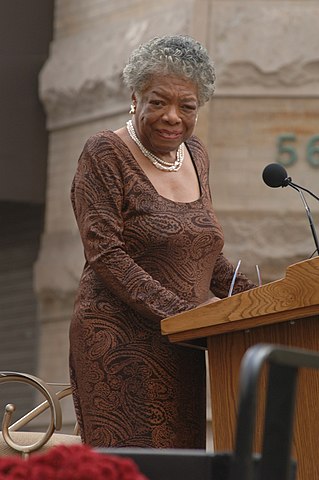
- Maya Angelou
- Toni Morrison
While most literary anthologies published today will include these writers as prominent and talented authors, their acceptance into the literary canon came only after intense debate over the last 150 years. Arguments against including these and other writers within the accepted literary canon were largely racist, stemming from a dominant cultural rejection of the value of Black writers. This debate continues within corners of the academic world, though writers like Frederick Douglass, Langston Hughes, and Maya Angelou, in particular, have themselves demonstrated the importance and quality of Black literary voices and perspectives. Similar debates continue regarding Native American, Hispanic, and Asian voices within contemporary Western literature.
The Debate Over Inclusion of LGBTQ+ Voices
Though occasionally present within the generally accepted Western literary canon, such as with the writings of Sappho, voices exploring life from within the LGBTQ+ perspective have historically been absent in or actively suppressed by the literary world. However, with the rise of awareness within Western society beginning in the late 19th century, these voices are now gaining consideration for canonical inclusion. Leaders within the LGBTQ+ community are increasingly gaining a voice in reshaping the canon to include their life perspectives within anthologies, syllabi, and generally used curricula. Some of the more commonly accepted queer voices in the literary canon include:
 |
- Virginia Woolf: Hugely influential for her use of the ''stream of consciousness'' approach to writing, Virginia Woolf was an incredibly influential writer who, though married, was known to have same-sex relationships.
- Walt Whitman: Though he did not overtly identify himself as gay within his more popular writing, Whitman is widely understood to have been an aware, gay man whose sexuality informed his choice of symbolism, allusion, and topics.
- Allen Ginsburg: With the extremely controversial and, at the time, illegal publication of his work ''Howl,'' Ginsburg is one of the most well-known of the early 20th-century queer voices.
- W. H. Auden: Best known for his poetry, Auden is considered a highly influential American writer.
- Alice Walker: Along with being one of the most prominent Black writers of her time and best known for her novel The Color Purple, Alice Walker is also recognized as an important voice within the bisexual community.
After national moves to rescind sodomy laws and with the eventual legalization of same-sex marriages, the queer community continues to develop recognition and acceptance with the literary world. As such, the voices of LGBTQ+ writers will likely continue to gain notoriety and prominence as they are increasingly included in the broader Western literary canon.
Stemming from an older Greek term, kanon, which meant straight rod, a canon is a standard by which other things are measured. As such, the literary canon is a technical term used to describe a set of texts that serve as a recognized standard against which other writers and texts are judged. Canon in literature, often called Western canon, can also classify works that belong to a particular literary tradition or author. The purpose of a literary canon is to assess a new text for its stylistic quality, cultural or social significance, and intellectual value. The literary canon also forms the basis from which a society grows and develops since its canonical texts and thinkers establish the philosophical and imaginative boundaries of society. Some examples of authors included in the literary canon include Jane Austen, Gabriel Garcia Marquez, Chinua Achebe, Maya Angelou, and Ray Bradbury.
Since the literary canon is determined by usage and general acceptance, the 20th and 21st centuries have been marked by a wide-ranging debate over the inclusion of underrepresented writers and texts from non-dominant cultures, called canonical inclusion. These debates advocate for the inclusion of the voices of BIPOC (Black, indigenous, and people of color), queer, and other minority perspectives into the literary canon.
Video Transcript
Literary Canon Defined
Have your teachers ever assigned the works of Shakespeare, or maybe some by the Bront? sisters? If so, they probably wanted you to gain experience with what they would call literary canon, which is a collection of works by which others are measured in terms of literary skill and value.
Originally, the Greeks used a kanôn ('straight rod') as a tool in surveying and construction projects to keep things straight and level. Over time, its use as a measuring device was adapted to apply to keeping literary works straight, as well. Through the years, 'canon' has been employed in various ways to classify literature: from assigning works to a particular tradition (i.e. Biblical canon) to attributing them to a specific author (i.e. Shakespearean canon).
The primary usage discussed in this lesson, though, refers to the canon as a yardstick for measuring the value and validity of the world's literature. Many members of the American academic community in the 1980's revolted against this idea of what was then often called the Western canon, which was claimed to be a collection of the world's highest and most influential literature. They felt that there were many other examples of great literature to be found in the world and that the current collection was not as inclusive as it should be. For instance, some of these protestors' central arguments focused on the underrepresentation of women and people in minority groups among the ranks of authors whose works were considered important enough to be part of the literary canon.
Since the 80's, the literary canon has expanded considerably, now including many female authors and people from all walks of life.
Some Authors of the Literary Canon
Let's look at some of the authors whose work is part of the literary canon.
Homer -For millennia, the works of Homer - the famous Greek epics, Iliad and Odyssey - have been considered some of the highest forms of literature in the world. The problem is, though, we're not sure that this renowned bard was a real or even a single person! In fact, we're actually pretty certain he wasn't. Nevertheless, 'Homer' and the many writers he has influenced have been listed among the world's greatest literary minds since antiquity.
 |
William Shakespeare -The plays and poetry of William Shakespeare have long been considered some of the best examples of English literature ever penned. Such high acclaim has of course also earned his works a place in the literary canon. For centuries, English writers have compared themselves and have been compared to the Bard. This sort of looking to an author's work as a measure of literary success and value is precisely what being part of the literary 'canon' is all about.
Jane Austen- From antiquity, literary circles have been overflowing with testosterone. Of course, this doesn't mean that there haven't been any exemplary female authors, just that they've been historically excluded from the literary elite. Since the 'canon wars' of the 1980s, many more female writers (i.e. Virginia Woolf, Maya Angelou) have populated the list, including Jane Austen whose books like Northanger Abbey and Emma have been added to the roll of literary classics.
 |
Ray Bradbury- Another of the concerns that students and educators had in the 80's was that the literary canon highly favored European authors. Since then, many more Americans have swelled the ranks of the world's most notable writers. Concerned with the future of literature itself, Ray Bradbury's Fahrenheit 451 was a shoo-in for inclusion in the literary canon. Several other Americans - including Twain, Steinbeck, and Hemingway - have also taken their place on the list.
Gabriel García Márquez- Even with the inclusion of authors from the U.S., the literary canon still seemed overpopulated with English, German, French, and Russian masterpieces. Where's the Spanish? The Pashtu? The Mandarin? Protesters of the 'Western' canon also wanted to broaden the scope of languages and peoples represented in the collection. Renowned Colombian author Gabriel García Márquez was one who helped expand the canon to include more Hispanic writers, with influential works like his Love in the Time of Cholera (El amor en los tiempos del cólera).
Alice Walker
Known for her famous novel The Color Purple told in the voice of Celie, Alice Walker's collections of novels, poetry, short stories, and essays embrace the culture of early twentieth-century Black Americans with a focus on Black women's lives. As an activist for racial and gender equality, Walker's works reveal the beauty and strength of her characters in their peaceful tolerance for adversity. The Color Purple earned Walker the first Pulitzer Prize for fiction awarded to an African American woman and has been made into an award-winning movie and musical.
Richard Wright
Having grown up as a Black child in poverty, Wright's novels, poetry, short stories, and non-fiction works address racial themes and the difficulties African Americans faced during the late 19th to mid 20th centuries with the style of protest, boldly exposing discrimination and its impact. His more famous works include his memoir Black Boy, the novel Native Son, and his novella collection Uncle Tom's Children, all of which are featured in school curriculums across the United States.
Lesson Summary
Let's review. The literary canon is a collection of works by which others are measured in terms of literary skill and value. Derived from the Greek kanôn ('straight rod'), the term 'canon' has been used to classify works belonging to either a particular tradition (i.e. Biblical) or author (i.e. Shakespearean). However, our primary usage of it here refers to the canon as a representation of the world's greatest literature.
Since the 1980's, what was then often referred to as the Western canon has been expanded to include female authors and others from all walks of life. The movement to more broadly represent the world's great literary talents has expanded the canon to embrace the works of Jane Austen, Ray Bradbury, and Gabriel García Márquez along with those of the likes of Homer and Shakespeare.
Register to view this lesson
Unlock your education
Become a Study.com member and start learning now.
Become a memberAlready a member? Log in
Go backResources created by teachers for teachers
I would definitely recommend Study.com to my colleagues. It’s like a teacher waved a magic wand and did the work for me. I feel like it’s a lifeline.
