Now that we know the risk factors for type 2 diabetes, let's look at how we become insulin resistant and how this insulin resistance leads to symptoms of type 2 diabetes.
The mechanism for insulin resistance is very complex. A person might not be insulin resistant in some tissues, like liver tissue, but be resistant in others, like adipose (fat) tissue. In fact, while scientists are fairly sure of the correlation between insulin resistance and obesity, they're faced with a 'chicken or the egg' problem; that is, it's not clear if insulin resistance causes obesity or the other way around.
What they do know is that when a combination of risk factors makes a person insulin resistant, the hormone loses its effectiveness, and muscle, fat, and liver cells don't take up glucose. In response, the body makes even more insulin in an effort to drop blood glucose levels - and it works...at first. Eventually, though, even this increase in insulin doesn't do anything, and so the pancreas' beta cells make even more. The cycle continues with blood glucose levels increasing and the beta cells making more insulin to compensate... until eventually, the beta cell function starts to decline, leaving just high concentrations of glucose in the blood.
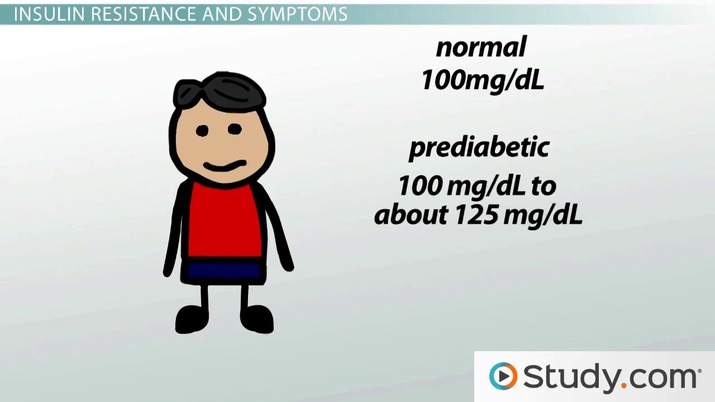
This high concentration of glucose in the blood is called hyperglycemia, and it is probably the most well-known symptom of diabetes. This makes sense: if insulin isn't able to help glucose get into cells, then it's going to remain in high levels in the bloodstream. In a normal person, fasting blood glucose levels are usually around 100mg/dL. In a prediabetic person, it ranges from 100 mg/dL to about 125 mg/dL, and in a diabetic person, it's 126 mg/dL or more.
In the early stages of type 2 diabetes, hyperglycemia often appears with another 'hyper' symptom: hyperinsulinemia, a high concentration of insulin in the blood. Hyperinsulinemia starts to disappear when beta cell function declines.
Before we leave blood parameters that mark type 2 diabetes, let's talk about one more: Hba1c. This is a measure of glycosylated hemoglobin, basically, how much glucose is attached to the hemoglobin present in red blood cells. The longer a person is in a state of hyperglycemia, the higher their Hba1c. In a normal person, it's less than 5.7%. It's elevated in prediabetes, up to 6.4%, and high in diabetics, where it's over 6.5%.
Type 2 diabetes also usually appears with what medical professionals sometimes call the 'three Ps': polyphagia, a frequent feeling of being hungry; polydipsia, drinking frequently to try and quench a constant feeling of thirst, and polyuria, a frequent need to urinate. You should notice that the word 'frequently' appears in all three definitions, as does the Greek root 'poly.' 'Poly' means 'frequently.' Other symptoms include blurred vision, glucose in the urine, fatigue, and the inability to heal cuts and infections quickly. People with prediabetes also experience some of these symptoms.
All of the symptoms make sense when you use an 'if/then' type of logic. If cells aren't able to use glucose, then it's going to trigger the body's hunger response and also make you feel tired and energy-deprived. If there is a high concentration of glucose in the blood, then the kidney won't be able to absorb it all, and some will spill into the urine. If there is a high concentration of glucose in the urine, then more water will move into the urine through osmosis, creating a large urine output. If a lot of water is lost through a high volume of urine, then the body will activate the thirst response. If there is an elevated level of blood glucose, then the circulatory system will react to this constant saturation by becoming compromised, leading to symptoms like poor wound healing and elevated levels of Hba1c.