
Discover who Cybele was in Roman mythology. Explore the myth of Cybele and Attis, learn about the cult of Cybele, and see how the goddess is usually depicted in art.
The Goddess Cybele | Origin Myth, Cult & Festivals
Table of Contents
Show
Frequently Asked Questions
What was Magna Mater symbolized by?
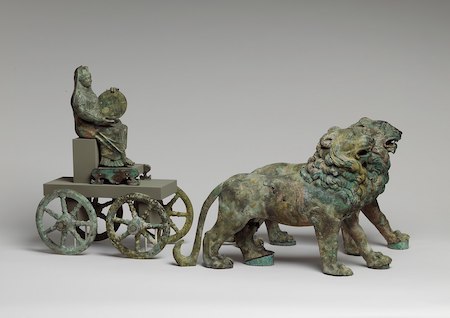
In art, the Magna Mater was often depicted wearing a crown and a veil. She would typically be seated either on a throne or on a chariot drawn by two lions.
What is Cybele known for?
Cybele is known for being the mother of the gods, the earth, nature, and humans. In her origin myth, she was born a hermaphrodite, and she was worshiped alongside Attis, a fertility god. Her cult became prominent in the Roman Empire and is associated with frenzied worship.
What is the cult of Cybele?
The cult of Cybele was a major cult of the Roman Empire associated with frenzied worship. Its priests were called the Galli. The Galli castrated themselves in accordance with the myth of Attis and dressed as women. Festivals in honor Cybele and the fertility god Attis were held in spring and included games, feasts, and sacrifices.
What is Cybele the goddess of?
Cybele was considered the Great Mother of the Gods and was associated with motherhood, nature, fertility, and agriculture. She was originally worshiped in the kingdom of Phrygia, but her cult spread to Greece and Rome, where she was identified with various Greek and Roman goddesses. Her cult was a major cult in the Roman Empire.
Table of Contents
ShowCybele, considered the Great Mother of the Gods in Roman mythology, was a mother goddess figure considered to have given life to gods, humans, and animals. She is a personification of Mother Earth and is sometimes referred to as the Magna Mater, meaning great mother. Cybele is the Roman equivalent of the Greek goddess Rhea, the wife of Cronus and the mother of Zeus. Her cult seems to have originated in Phrygia, a kingdom in Asia Minor, but worship of Cybele spread to Greece and eventually became a major cult of the Roman Empire. She is often associated with motherhood, nature, fertility, and agriculture.
Depictions of Cybele were prevalent in the art of the Roman Empire. She was usually depicted as wearing a crown and veil, and she would be seated on either a throne or a chariot drawn by two lions.
 |
Cybele: Goddess Origin Myth
According to some mythical versions of her origin, the goddess Cybele was born to the sky god and earth goddess of Phrygia, an ancient kingdom in Asia Minor. The goddess was born as a hermaphrodite, meaning she was both male and female. When the gods saw this, they became scared and castrated Cybele. They threw her male organ upon the ground, and an almond tree grew from it. When Nana, a daughter of the river Sangarius, came upon the tree, she picked its fruit and held it to her chest. The fruit disappeared, and she became pregnant. The child she bore was named Attis.

Your next lesson will play in
10 seconds
After some time, Cybele became enamored with Attis. As he was about to be married to the daughter of a king, Cybele went into a rage and drove Attis mad. As a result, Attis castrated himself and killed himself at the foot of a pine tree in the woods. When Cybele came upon his body, she repented to Zeus, who granted that Attis be resurrected and that his body should never waste or decay. The pine tree was also declared sacred by Zeus on this occasion. Other versions of the Attis myth exist, but the key element of self-castration is included in all of them.
Cybele and Attis were worshiped together. Attis was worshiped as a fertility god: his death and resurrection represent plants of the earth, which die in the winter and grow again in the spring. In art, Attis was depicted wearing a Phrygian hat.
 |
Cybele was the Phrygian version of a nature deity that was worshiped across Asia Minor. From Asia Minor, the worship of Cybele spread first to Greek territory, where the goddess was identified with the Greek goddess Rhea. However, Cybele's major cult following formed during the Roman Empire. The Romans followed a prophecy enlisting the help of Cybele against Hannibal's invasion of Italy in 204 BC, and they identified Cybele with their goddesses Maia, Ops, Rhea, Tellus, and Ceres. The cult of Cybele became one of the most important in the Roman world.
The Greek, Roman, and Phrygian worshipers of Cybele all emphasized her universal motherhood. Her priests were called Galli and castrated themselves upon entering her service, in accordance with the myth of Attis's self-castration. The Galli dressed in female clothing and engaged in frenzied worship that included self-laceration and self-flagellation. The frenzied worship was not quickly accepted in Rome, and Roman citizens were banned from partaking in the worship of Cybele before the Roman Empire. Eventually, however, the Roman Senate sanctioned the religion. Because Cybele was identified with the earth and nature, she was often worshiped for the purpose of agriculture.
Festivals
Two spring festivals, Megalesia and Taurobolium, were held in honor of Cybele each year. The cult of Cybele celebrated Megalesia, a festival which lasted for six days beginning on April 4th and lasting until April 10th. The festival included games, feasts, and theater performances. A chariot race was held on the final day. The Taurobolium was a sacrificial holiday. The grand priest would cut his arm and offer his blood up to the goddess, while the lesser priests danced and mutilated themselves, allowing their blood to spray onto the altar. At a later point, the celebration included sacrificing a bull over a pit in which a man lay and was bathed in the blood.
Cybele, or the Great Mother of the Gods, was a deity associated with universal motherhood and was worshiped in Asia Minor, Greece, and Rome. Her cult seems to have originated in Phrygia, a kingdom in Asia Minor, but worship of Cybele spread to Greece and eventually became a major cult of the Roman Empire. Because she was identified with motherhood of nature, Cybele was often worshiped for the purposes of agriculture.
According to Roman myth, Cybele was born as a hermaphrodite, meaning she was both male and female. When the gods saw this, they cut off Cybele's male organ and threw it to the ground. An almond tree grew from it, and when a daughter of the river Sangarius picked a fruit from the tree, she became pregnant with Attis. Cybele eventually fell in love with Attis, and when Attis was about to marry a king's daughter, Cybele drove him mad, leading Attis to castrate and kill himself under a pine tree. Cybele pleaded to Zeus in repentance, and Zeus resurrected Attis and permitted that his body never waste or decay. Attis was worshiped alongside Cybele as a fertility god.
The cult of Cybele was characterized by frenzied worship. Its priests, called the Galli castrated themselves in accordance with the myth of Attis and engaged in self-laceration and self-flagellation. Roman citizens were at first banned from worshiping Cybele, but under the Roman Empire the cult was sanctioned by the Roman Senate. Megalesia was a festival held in honor of Cybele from April 4th to April 10th, and Taurobolium was a sacrificial holiday in honor of the goddess.
Video Transcript
Who Was Cybele?
There were many goddesses of fertility in mythology, but there could only be one Great Mother of the Gods. To the Greeks, it's the goddess Rhea, the wife of Cronus and the mother of Zeus. In Roman mythology, however, she's called Cybele, the universal mother of not only the gods but also of all humans, animals, and plant life. Referred to as the Magna Mater, or Great Mother, she was the personification of Mother Earth. In art, she's usually depicted on a throne or in a chariot wearing a tall cylindrical crown and in the constant presence of a lion.
The Cybele Myth
According to myth, Cybele was born to the sky god and the earth goddess in Phrygia, an old country in Asia Minor. The goddess was born a hermaphrodite, meaning she was both male and female. This scared the gods, so they castrated her and tossed the male organ to the ground. From it, grew an almond tree. One day, a daughter of the River Saggarios came upon the tree and plucked its fruit. Holding it to her chest, it disappeared and suddenly, she was pregnant. The child she bore was named Attis.
Cybele eventually fell in love with the beautiful Attis and had the boy promise to always belong to her. Instead of remaining loyal, however, he asked a king for his daughter's hand in marriage. Enraged and in a jealous frenzy, Cybele appeared at the wedding and drove everyone mad, including Attis, who ran off into the hills. Screaming and thrashing about, he cursed himself for forsaking the goddess. Then, he castrated himself. Cybele came upon his bloodied body at the foot of a pine tree. Feeling so guilty for what she had done, she repented her actions to Zeus. Empathetic to the goddess, Zeus decreed that Attis' body would never decay and that the pine tree would forever be considered sacred.
The Worship of Cybele
There was not a large cult following of the goddess among the Greeks, but she was quite popular in Roman society even though cults were banned. Roman leaders felt they threatened their power. But still, her following grew. Eventually, the Roman Senate sanctioned the religion. Cybele even became known as the protector of soldiers during war.
The cult's priests were called Galli, and because of the castration of Cybele and Attis in the myth, they were also said to castrate themselves. The priests were transgender and would try to behave and appear as womanly as possible. And, in many of their religious practices, cult followers were known to adorn themselves with pine cones and use loud music, hallucinogenic plants, and zealous dance moves.
Because of the emphasis on earth and nature in the myth of Cybele, she was often worshiped for the purpose of agriculture. Two festivals in honor of Cybele were the Megalesia and the Taurobolium, which were held each year in the spring. Megalesia was celebrated for six days beginning on April 4th. The days were filled with games, feasts, and theater performances. A chariot race brought the festival to a close on the final day.
The Taurobolium was a bit bloodier. In fact, it's referred to as the ''Day of the Blood.'' Held on March 24th, the grand priest would cut his arm and offer his blood up to the goddess while the lesser priests danced and self-mutilated themselves, allowing their blood to spray onto the altar. Later, a blood sacrifice of a white bull would also be performed in her honor.
Lesson Summary
All right, let's now take a moment or two to review what we've learned about Cybele. To the Greeks, she was known as Rhea, the wife of Cronus and the mother of Zeus, but to the Romans, Cybele, the Magna Mater or Great Mother, was the universal mother of not only the gods, but also of all humans, animals, and plant life.
Born as both a male and female, known in mythology as a hermaphrodite, the frightened gods castrated her and from the male organ grew an almond tree. Fruit of that tree later created Attis, a beautiful boy with whom Cybele fell madly in love. However, she was betrayed by him when he planned to marry another. As punishment, Cybele drove Attis mad until he castrated himself and fell dead among the pine trees.
Cybele grew popular in the Roman society where a cult following emerged led by the Galli, who were priests who were said also to practice self-castration. Two festivals in her honor were held in the spring each year where food, fun, and blood sacrifices were the main events.
Register to view this lesson
Are you a student or a teacher?
Unlock Your Education
See for yourself why 30 million people use Study.com
Become a Study.com member and start learning now.
Become a MemberAlready a member? Log In
BackResources created by teachers for teachers
Over 30,000 video lessons
& teaching resources‐all
in one place.


I would definitely recommend Study.com to my colleagues. It’s like a teacher waved a magic wand and did the work for me. I feel like it’s a lifeline.
Jennifer B.
Teacher

Back

The Goddess Cybele | Origin Myth, Cult & Festivals Related Study Materials
Explore our library of over 88,000 lessons
Browse by subject