
Learn about the scientist, Francesco Redi. Identify Francesco Redi's contributions to cell theory and discover what year Redi carried out his famous experiment.
Francesco Redi | Overview, Cell Theory & Experiment
Table of Contents
- Who Was Francesco Redi?
- Redi's Work as a Scientist and Poet
- Francesco Redi and Cell Theory
- Lesson Summary
Frequently Asked Questions
When did Francesco Redi contribute to the cell theory?
In 1668, Redi conducted controlled experiments to disprove abiogenesis. His book called, 'Experiments on the Generation of Insects' dismissed the idea of spontaneous generation.
What did Francesco Redi do for the cell theory?
Francesco Redi conducted a controlled experiment where he showed living organisms come from other living organisms. This worked, coupled with the work of later scientists, helped develop the third tenant of the cell theory: cells come from other living cells.
What is Francesco Redi known for?
Francesco Redi is known for his work on parasitology and experimental biology. Francesco's experiment with maggots helped develop the third tenant of the cell theory.
Table of Contents
- Who Was Francesco Redi?
- Redi's Work as a Scientist and Poet
- Francesco Redi and Cell Theory
- Lesson Summary
Francesco Redi was born in Tuscany, Italy on February 18, 1626. In 1647, at the age of 21, Redi graduated with his doctoral degree in medicine and philosophy from the University of Pisa. After graduation, he became a physician to the Medici family, who ruled over Florence and Tuscany.
Redi's upbringing in the Renaissance era exposed him to poetry and classical literature. His upbringing in Renaissance thought helped sculpt him as a noted poet, linguist, literary scholar, and student of dialect.

Your next lesson will play in
10 seconds
Redi used his influence, reputation, and sound experimental design to broadly influence the thinking of other scientists.
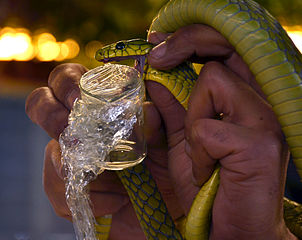
It was once believed deadly to eat an animal that had been killed by snake venom. Likewise, it was also believed that snake venom was produced in the snake's gallbladder, and the head of the snake was an antidote to its venom. Redi made observations that snake venom was only deadly when injected into the bloodstream. He also observed that snakes have two small bladders covering their fangs. When these bladders were compressed, venom was released. He concluded, venom from a snake came from fangs and not the snake's gallbladder. In 1664, Redi produced his first major work called, Observations on Vipers where he presented his findings on viper venom.
 |
Redi is called the father of parasitology for his work with parasites. Parasitology is the branch of science that studies parasites. Redi was the first to correctly recognize and describe 180 different parasites. In 1684, Redi published his results in a book called, Observations on living animals that are in living animals. His book included drawings of parasites and the locations they were found. This marked the beginning of modern parasitology.
Redi also included a discussion on experimental controls in his book. In an experiment, Redi used controls to study the health of animals infected with parasites. He observed how the health of animals given chemical treatments for parasites compared to the health of animals not given treatment for parasites. The animals not given treatment for parasites were referred to as the control group. Redi's work with experiments lead him to be referred to as the founder of experimental biology.
In 1695, Redi published a work called, Bacchus in Tuscany. In this work, he glorified Tuscan wines. Bacchus was an ancient pagan deity. The name Bacchus means 'god of wine'. In Redi's book, he wrote about Bacchus coming to Tuscany and living in the area because of its great wine. This book earned Redi a spot as a published poet.
Redi was familiar with Aristotole's work published in 350 B.C. on spontaneous generation. Aristotle had observed the emergence of rats, flies, and maggots from rotting meat and decomposing items. Aristotle proposed life arose from nonliving material and referred to it as spontaneous generation. The theory of spontaneous generation continued into the 17th century. While reading the nineteenth book of the Iliad by Homer, Redi came across a passage that sparked his interest. The passage referred to flies landing on a dead body and breeding worms. Being curious, Redi began to conduct experiments about abiogenesis, or the idea that life spontaneously originates from natural processes from nonliving matter.
In Redi's experiments, he had set out to provide evidence to support biogenesis. Biogenesis is the idea that life comes from other life. In his experiments, Redi showed that cells did not come from nonliving matter. His results showed the opposite. They showed living things must come from other living things, adding the third pillar of cell theory.
Cell theory is a basic set of ideas about cells biologists hold to be true. The first two tenants state:
- All living things are made up of cells
- Cells are the basic units of structure and function in living things
Although Redi's experiments provided living organisms came from other living organisms, his ideas were not fully accepted until later in the 19th century. In 1850, Rudolph Virchow was researching diseases and observed cells arise from preexisting cells. This idea, coupled with Redi's experiment, finalized the third tenet of the cell theory:
- Living cells come from other living cells
What Year Did Redi Carry Out His Experiment?
In 1668, Redi conducted controlled experiments to disprove abiogenesis. They included the following:
- In the first experiment, Redi placed dead fish and raw meat in six jars. Three of the jars were sealed and the other three were left open.
- In the second experiment, Redi placed raw meat in three jars. One jar was plugged with a cork, the second jar was covered with gauze allowing oxygen to enter, and the third jar was left open.
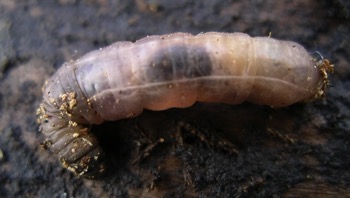
Redi allowed the jars to sit. After a few days, Redi noticed the meat in the open jars contained maggots, the sealed jars contained no maggots, and the jar with gauze had maggots on top of the gauze, but not in the jar. Redi noticed the maggots morphed into flies. He concluded the maggots arose from tiny eggs laid on the rotting meat. Redi then placed dead flies in one jar containing meat and live flies in another jar containing meat. As Redi expected, only the jar with live flies produced maggots.
 |
Both of his experiments were considered controlled experiments. A controlled experiment is one in which all variables remain the same except for one variable in the experimental group. In his experiments, the control group was the jar that represented the normal condition; these were the uncovered jars. The experimental group was the jar that represents change; these were the covered jars.
Likewise, in 1668, Redi published his findings in a book called, Experiments on the Generation of Insects. In this book, Redi dismissed the idea of spontaneous generation. His controlled experiments showed:
- Maggots arose from fly eggs.
- Maggots did not appear on meat in a covered jar.
- Maggots only appeared on meat left in an uncovered jar where flies could lay eggs.
Redi's findings on biogenesis were later used to develop the cell theory.
Francesco Redi lived during the 17th century in Italy. He was born in Tuscany, Italy on February 18, 1626. Redi used his influence, reputation, and sound experimental design to broadly influence the thinking of other scientists. In addition to his work on spontaneous generation, Redi contributed a notable work on snake venom. In 1664, Redi produced his first major work called Observations on Vipers where he presented his findings on snake venom. In his work, he stated venom came from the fangs in a snake and was only deadly when it entered the bloodstream. Redi is called the father of parasitology, which is the branch of science that deals with parasites. In 1684, Redi published a book called Observations on living animals that are in living animals where he included drawings of over 100 parasites and the locations they were found.
The theory of spontaneous generation states living organisms arose from nonliving material and was a widely accepted theory. A small section in the Iliad by Homer sparked Redi's curiosity about abiogenesis or the idea that life spontaneously originated by natural processes from nonliving matter. In 1668, Redi conducted controlled experiments to disprove abiogenesis. A controlled experiment is one in which all variables remain the same except for one variable in the experimental group. In Redi's famous experiment on meats, the meat left in the jar was the controlled condition. In 1668, Redi published a book called Experiments on the Generation of Insects where he dismissed the idea of spontaneous generation. Redi's findings on biogenesis, or the idea that life comes only from other life, was later used to develop the third tenet of the cell theory. The cell theory is a basic set of ideas about cells biologists hold to be true. The third tenant states: living cells come from other living cells.
Video Transcript
Background to Fransesco Redi
Boy, it seems they don't make 'em like that anymore. Francesco Redi was not only a world-class scientist responsible for the fruit fly experiment many of us remember from high school biology class, but he was also a published poet, academic, and physician.
We'll visit his famous meats, maggots, and flies experiment later in this lesson, after learning a little more about some of his early life and training.
Biography of Redi
Francesco Redi was born in Italy in 1626, towards the tail end of the Renaissance, which greatly influenced his thinking and his varied interests in the arts and sciences. His father was the family physician to the famed Medici family, one of the wealthiest and most influential families in Europe.
Francesco trained as a physician and took over his father's role as Medici family physician. During this time, he earned a reputation as one of the finest scientists in the world, earning membership in Europe's most prestigious scientific societies of the time.
Redi's Early Scientific Findings
His first monumental scientific work was about snake venom and offered evidence contrary to many of the common beliefs about snake venom of the time. During this time, he also emphasized in his scientific writing the importance of experimental controls, a control group and a test group.
He was certainly not the first scientist to arrive at this idea. However, because of his clear style of writing and his renown, his championing of the notion of experimental controls certainly had a wide influence on the scientific community of the day.
Redi's Theory of Biogenesis
It was a commonly held belief in the 1600s that life could arise from non-living materials, a process called spontaneous generation or abiogenesis.
I am the father of three girls who have a tendency to leave half-eaten apples and bananas in the back of the car. Sure enough, when those non-living things are left in the car, clouds of fruit flies result. It's easy to see why people would believe in spontaneous generation. Using a controlled experiment, Francesco Redi challenged the commonly held and easily understandable notion that maggots come from rotting meat. After all, when there is rotting meat, there are usually maggots.
In Redi's experiments, meat was put into a jar with three types of treatments. One was left entirely uncovered, open to the air. A second was covered with gauze, through which air could pass, but large insects could not. The third was covered entirely, blocking air and everything else from the meat.
Maggots developed on the meat in the uncovered jar. Maggots developed on the gauze to the second jar, but not on the meat. No maggots developed anywhere on the entirely sealed jars. His experiments strongly supported the idea of biogenesis, that life comes only from other life, as the maggots, which develop eventually into flies, only arose on the meat when flies (life) were able to access the meat directly.
Redi published the results of his work in 1668 in his seminal work, Esperienze Intorno Alia Generazione Degli Insetti (Experiments on the Generation of Insects). While this work did not disprove abiogenesis, it was probably the most historically influential work in discrediting the idea.
Redi's Other Work
Redi did much of his work on parasites and was a renowned expert in that field at the time. He was also a poet, and his poem 'Bacco in Toscana' ('Bacchus in Tuscany') celebrated the wines of Tuscany, and is not only considered one of the great literary works of the 17th century, it is still read today, especially by Italian vinophiles.
Lesson Summary
Working in Italy in the 17th century, Francesco Redi was a titanic figure in the science of the time and remains so to this day. He was a world-class scientist responsible for the fruit fly experiment that many of us remember from high school biology class, as well as a published poet, academic, and physician.
His most famous and influential work strongly discredited the notion of spontaneous generation, abiogenesis, or life arising from nothing, by demonstrating that maggots only are found on meat when it is exposed to the air, and flies, not when meat is sealed off from the elements. This led to the theory of biogenesis, or the theory that life can only arise from other life.
He also studied snake venom and parasites, and he promoted the idea of experimental controls, which involve a control group and a test group. However, a true Renaissance man, he was also an eminent physician and poet.
Register to view this lesson
Are you a student or a teacher?
Unlock Your Education
See for yourself why 30 million people use Study.com
Become a Study.com member and start learning now.
Become a MemberAlready a member? Log In
BackResources created by teachers for teachers
Over 30,000 video lessons
& teaching resources‐all
in one place.


I would definitely recommend Study.com to my colleagues. It’s like a teacher waved a magic wand and did the work for me. I feel like it’s a lifeline.
Jennifer B.
Teacher

Back

Francesco Redi | Overview, Cell Theory & Experiment Related Study Materials
Explore our library of over 88,000 lessons
Browse by subject